
Saint Dominic Resuscitating Napoleone Orsini
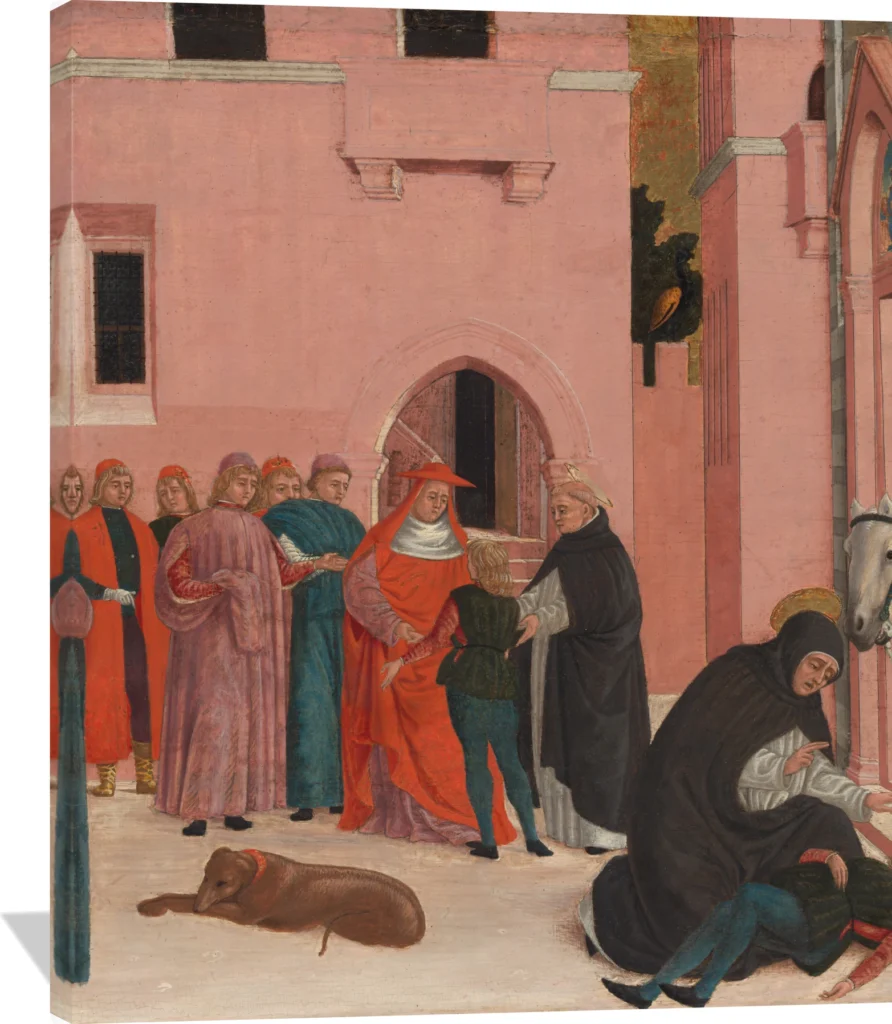
The Bartolomeo degli Erri Saint Dominic Resuscitating Napoleone Orsini canvas captures a moment of divine compassion rendered in luminous Renaissance tones. Soft pinks, deep reds, muted greens, and warm golds create a serene architectural setting where faith and miracle intertwine. The balanced composition and gentle light evoke quiet reverence and timeless grace.
This museum-quality canvas print brings historical depth and spiritual beauty to any space. Ideal for a sophisticated living room, contemplative study, or elegant entryway, this wall art honors Italian artistry from Modena’s 15th century with enduring elegance and emotional presence.
Bartolomeo degli Erri was an Italian painter active in Modena between 1460 and 1479, working at the heart of the city’s artistic renewal during the early Renaissance. Known for his involvement in the local workshop he shared with his brothers, he contributed to the visual language that shaped Modenese devotional art.
Artistic Style
Bartolomeo’s paintings are characterized by elongated figures, serene expressions, and a refined, linear elegance typical of the Emilian school. His use of luminous color, crisp outlines, and balanced compositions reflects the transition from late Gothic sensibilities toward the emerging Renaissance interest in clarity and spatial harmony.
Subjects and Themes
Bartolomeo specialized in religious imagery, creating altarpieces and panel paintings that depicted saints, the Virgin Mary, and narrative scenes from Christian tradition. His work often combines symbolic detail with an intimate emotional tone, offering viewers a contemplative experience grounded in devotional purpose.
Legacy and Significance
As a central painter in mid‑fifteenth‑century Modena, Bartolomeo degli Erri played a vital role in shaping the region’s artistic identity. His contributions show the distinctive blend of Gothic refinement and early Renaissance innovation that characterized Modena’s cultural moment. Today his work is appreciated for its meticulous craftsmanship, spiritual clarity, and the subtle yet distinctive elegance that marks his place in Italian art history.
Trust & policies
- 🚚 Free tracked shipping to 45+ countries. Local import duties or taxes may apply in some destinations.
- 🎨 Made-to-order, printed close to your delivery location
- 🛡️ If damaged, defective, or misprinted: free replacement or refund
- 🌍 Printed in US/CA/EU/UK/AU based on delivery location
- 💎 Acid-free, fade-resistant canvas with solid wood stretcher bars
- 🖼️ Optional pine floating frames in white, black, or brown
- 🪝 Ready to hang — hardware pre-installed