Artistic Style
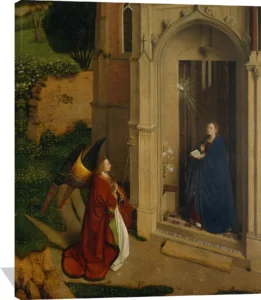
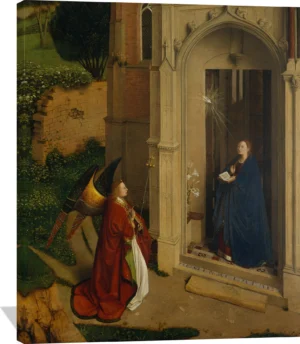
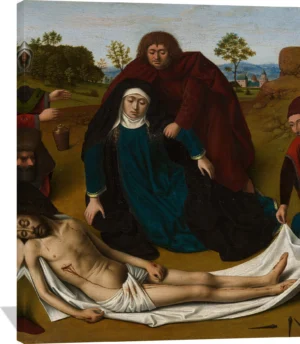
Christus is celebrated for his meticulous detail, serene compositions, and masterful use of oil paint. His work embodies the precision and luminous clarity associated with early Netherlandish art, yet he introduced a more intimate sense of presence in his figures. His handling of perspective was innovative for the region, lending interior scenes a convincing spatial coherence that set new standards for realism.
Subjects and Themes
His oeuvre includes devotional images, portraits, and refined narrative scenes. Portraits such as Portrait of a Carthusian exemplify his ability to render psychological depth with understated elegance. In religious works, Christus balanced symbolism with a grounded sense of everyday life, integrating sacred themes into believable domestic settings.
Notable Contributions
Christus played a central role in shaping Bruges as a thriving artistic hub. By adopting and expanding van Eyck’s techniques after the latter’s death, he helped sustain and evolve the city’s reputation for technical brilliance. His pioneering use of linear perspective, particularly in compositions like A Goldsmith in His Shop, demonstrates his commitment to visual clarity and has been regarded as a cornerstone in Northern European painting.
Cultural and Historical Significance
Operating during a period of flourishing trade and cultural exchange, Christus catered to local patrons as well as international visitors drawn to Bruges’ commercial power. His paintings reflect this cosmopolitan environment, combining Northern rigor with subtle influences from Italian art encountered through merchant networks. Today, his work is valued for its quiet sophistication, exceptional craftsmanship, and its role in bridging early Netherlandish traditions with emerging Renaissance ideals. Through his enduring attention to texture, light, and spatial harmony, Petrus Christus remains a defining figure in the evolution of early Northern realism and a master of the 15th‑century Flemish tradition.