Artistic Style
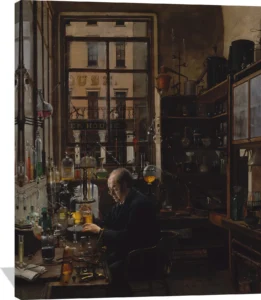
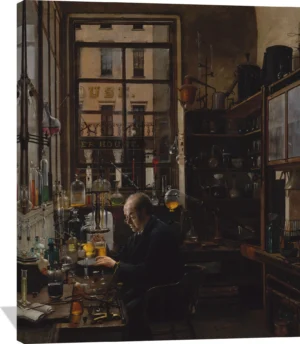
Alexander’s work is marked by an extraordinary level of detail, careful control of light, and quiet dramatic tension. His paintings often feature reflective surfaces, complex architectural spaces, and subtle shifts in atmosphere. This dedication to exacting realism, paired with a contemplative mood, positions him as a notable figure in late‑19th‑century American art.
Subjects and Themes
He is best known for his interior genre compositions, particularly those depicting bank offices, laboratories, workshops, and other professional environments. Alexander frequently portrayed solitary figures absorbed in work, emphasizing craftsmanship, concentration, and the human presence within expanding urban modernity. His ability to capture the textures of materials and the weight of silence inside these spaces became a defining signature.
Historical Significance
Although his career was brief, Alexander’s paintings offer a compelling record of America’s transition into a more industrial and bureaucratic age. His scenes reflect both the elegance and the constraints of late‑Gilded Age life. Today he is remembered for his exquisite technical skill and his unique contribution to American realist painting, with works such as The Laboratory and The Printing Shop standing as enduring examples of his craft.