Artistic Style
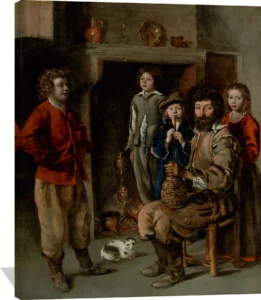
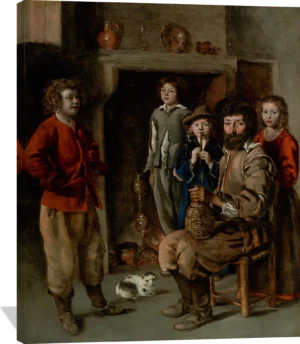
Le Nain’s work is distinguished by its quiet realism, balanced compositions, and a muted, silvery palette that lends his scenes a contemplative atmosphere. His figures possess a calm gravity, rendered with a sensitive treatment of light that reflects influences from both Flemish naturalism and the developing French Baroque. This blend of restraint and emotional depth remains a hallmark of his style.
Subjects and Themes
He is best known for portraying humble rural families, musicians, soldiers, and domestic interiors, elevating ordinary moments with a sense of dignity and humanity. Works such as Peasant Family exemplify his ability to capture subtle psychological nuance while maintaining a composition of striking simplicity. His occasional portraits and small devotional scenes also reveal a refined approach to character and mood.
Legacy and Significance
Antoine Le Nain played a vital role in shaping French genre painting, offering a sincere portrayal of social reality at a time when grand historical subjects dominated artistic circles. His paintings, marked by their quiet authenticity and emotional clarity, paved the way for later artists who sought truth in everyday subjects. Today, his works remain admired for their timeless humanity and the understated elegance that makes the Le Nain brothers emblematic figures of seventeenth‑century French art.