Artistic Style
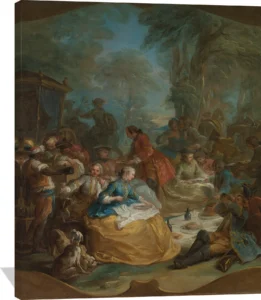
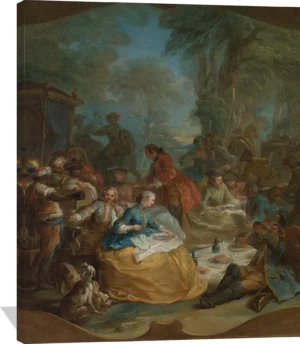
Vanloo’s work is recognized for its polished elegance, harmonious compositions, and fluid drafting. Blending the refined clarity of the French academic tradition with the graceful softness of the Rococo, he created paintings notable for their balanced proportions and expressive yet controlled emotion. His mastery of color and nuanced lighting contributed to the distinctive sophistication that marked his mature style.
Subjects and Themes
Renowned for his versatility, Vanloo produced history paintings, mythological scenes, portraits, and religious works with equal skill. Whether depicting heroic narratives, allegories, or intimate devotional moments, he approached each subject with sensitivity and technical precision. His figures are often idealized yet lively, revealing the artist’s command of gesture and anatomy.
Legacy and Significance
As one of the leading painters of his era, Vanloo played a key role in shaping French artistic standards. His influence extended through his teaching and his contributions to academic practice, reinforcing the principles of composition and drawing that became central to eighteenth-century French art. Celebrated in his lifetime and admired long after, his work remains a testament to the enduring appeal of the French academic tradition and the refined spirit of the Rococo.