Artistic Style
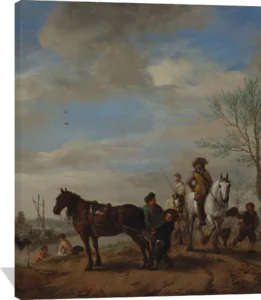
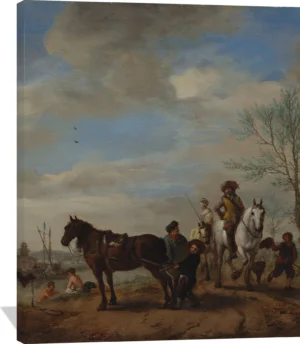
Wouwerman is distinguished by his exceptional handling of light and movement, creating compositions that feel both serene and dynamic. His brushwork is delicate yet precise, especially in the rendering of horses, which became his signature subject. Soft, silvery palettes and expertly constructed spatial depth characterize his mature style, lending his paintings a poetic, almost cinematic quality.
Subjects and Themes
Though he produced a wide variety of works, including battle scenes, hunting parties, rural landscapes, and coastal views, Wouwerman is best known for intricate equestrian scenes. Horses appear not merely as animals but as expressive elements that animate the narrative. Whether depicting a bustling military encampment or a quiet moment before a hunt, he infused everyday activities with elegance and subtle drama.
Contribution and Legacy
Wouwerman’s ability to blend narrative detail with refined composition made him a significant figure within the Dutch Golden Age. His works were widely collected during his lifetime and remained influential for centuries, admired for their craftsmanship and harmonious balance of realism and lyrical atmosphere. Generations of artists looked to his paintings for their technical mastery, especially his celebrated handling of equine anatomy.
Today, Philips Wouwerman is remembered as a preeminent painter of equestrian art and a subtle storyteller who elevated scenes of daily life into graceful visual poetry. His paintings continue to captivate with their gentle luminosity, rich detail, and enduring sense of vitality.