Artistic Style
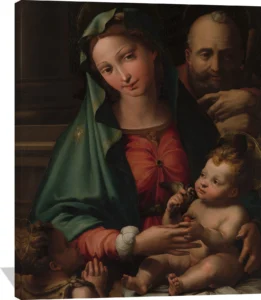
Perino del Vaga is celebrated for a style that unites Raphael’s harmonious compositions with a more expressive, inventive approach. He excelled in both painting and fresco decoration, crafting scenes marked by graceful figures, balanced architecture, and a subtle yet confident command of narrative. His ornamental vocabulary, often incorporating grotesques and classical motifs, contributed significantly to the visual language of Roman and Ligurian interior decoration. His ability to fuse classical refinement with imaginative detail made him a central figure in the evolution of Renaissance decorative art.
Notable Contributions
After Raphael’s death, Perino collaborated with leading artists of the papal court, contributing to major projects in the Vatican. His later work in Genoa, particularly the decorative cycles of Palazzo Doria, helped define a new standard for aristocratic interiors. These ambitious frescoes and ornamental schemes reveal his mastery in orchestrating large-scale compositions that seamlessly integrate painting, architecture, and ornament.
Subjects and Legacy
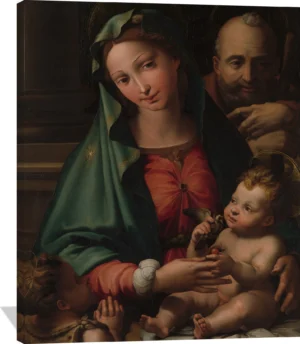
Perino’s subjects ranged from religious narratives and mythological scenes to richly conceived decorative programs. Throughout his career, he brought a sense of clarity and visual poetry to themes such as the Madonna and Child, saints, and classical figures. His approach influenced generations of artists in Rome, Florence, and Genoa, securing his role as a key intermediary between the ideals of the High Renaissance and the emerging dynamism of Mannerism.
Perino del Vaga’s enduring significance lies in his elegant synthesis of classical beauty and inventive design, a legacy that continues to captivate admirers of Renaissance art.