Artistic Style
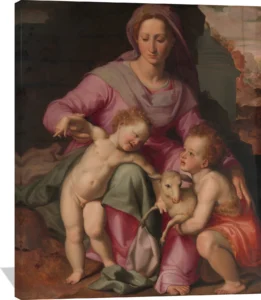
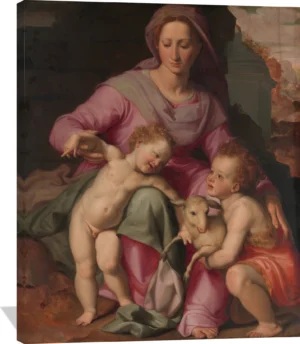
Santi di Tito developed a distinctive approach characterized by calm compositions, balanced proportions, and a renewed commitment to lifelike expression. Rejecting exaggerated poses and complex distortions, he embraced clarity, softened emotion, and gentle modeling. His style reflects a thoughtful reconciliation between Renaissance harmony and emerging naturalism, making his paintings especially appealing for their quiet dignity and accessible humanity.
Subjects and Themes
Best known for religious works, he frequently portrayed saints, biblical narratives, and devotional scenes with a serene, introspective quality. Portraiture was also an important part of his practice; his figures exhibit attentiveness to character and psychological presence, hallmarks of his mature work. Throughout both sacred and secular subjects, he emphasized sincerity of expression and a grounded sense of the real.
Notable Contributions
Santi di Tito played a major role in shaping Florentine painting during a period of stylistic transition. His influential frescoes and altarpieces helped reestablish a clear and intelligible visual language in religious art, aligning with the broader cultural climate of the Counter-Reformation. His celebrated work for the Basilica of Santa Croce and other Florentine institutions exemplifies his ability to unite doctrinal clarity with emotional warmth.
Legacy
Remembered as one of the artists who paved the way for the naturalism of the seventeenth century, Santi di Tito left a lasting imprint on generations of Florentine painters. His dedication to truthful depiction and refined restraint continues to distinguish his oeuvre, offering viewers artworks marked by gentle luminosity, purity of design, and a profound sense of human presence.