Artistic Style and Approach
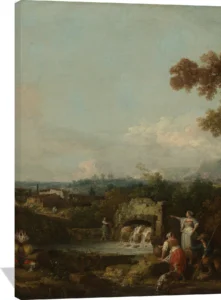
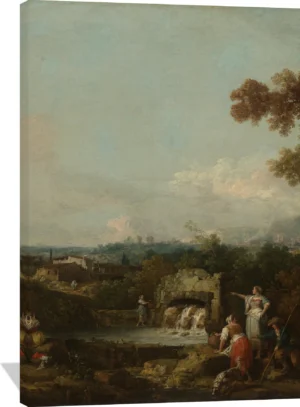
Zuccarelli is best known for his idyllic, Arcadian scenery, rendered with soft tonal harmonies and a refined sense of atmosphere. His landscapes often feature graceful figures, winding rivers, gentle hills, and classical ruins, creating an immersive vision of an idealized countryside. His distinctive blend of Venetian colorism and lyrical composition elevated the pastoral genre, making his works highly sought after by European collectors.
Notable Contributions
A founding member of the Royal Academy in London, Zuccarelli played a significant role in shaping the development of landscape painting across Europe. His collaboration with leading printmakers helped popularize his imagery, while his interactions with artists such as Canaletto further established the prominence of Italian landscape traditions abroad. His refined, poetic vision became a touchstone for the period’s pastoral aesthetic and influenced generations of artists.
Cultural and Historical Significance
Zuccarelli’s paintings capture a tranquil, harmonious world that resonated deeply with 18th‑century patrons seeking an escape from urban life. His works bridge the late Baroque and early Neoclassical periods, embodying a transition toward more naturalistic and contemplative subject matter. Today, his luminous pastoral scenes remain prized for their elegance, balance, and timeless sense of serenity.