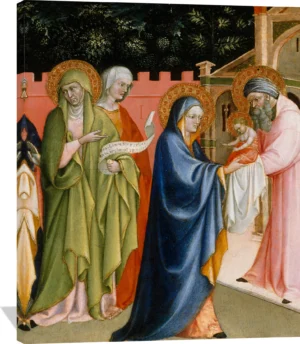
Artistic Style
Pirez’s work reflects a graceful fusion of Iberian Gothic sensibilities with the refined elegance of the Tuscan schools, particularly those of Siena and Pisa. His paintings are marked by luminous color, delicate linearity, and a serene emotional clarity that reveals his command of both ornamental detail and spiritual expression. He often employed gilded backgrounds and refined facial modeling, bridging older iconographic traditions with a growing interest in naturalism.
Subjects and Themes
Pirez specialized in sacred narratives, creating altarpieces, devotional panels, and tender portrayals of the Virgin and Child. His saints and angels are rendered with gentle poise, conveying a contemplative presence that made his work sought after by ecclesiastical patrons. The subtle drama within scenes such as the Annunciation or the Adoration highlights his ability to balance courtly elegance with theological depth.
Cultural Significance
As one of the first Portuguese painters to establish a career in Italy, Alvaro Pirez holds a distinctive place in European art history. His ability to blend cross‑cultural influences contributed to the wider artistic exchange that defined the period. Today, his surviving works offer insight into a moment when medieval spirituality and early Renaissance innovation coexisted, demonstrating his role as a refined transitional master whose paintings continue to captivate with their quiet radiance.