Artistic Style
Van Strij’s work is characterized by luminous tonalities, precise draftsmanship, and a poetic handling of light. Drawing inspiration from Golden Age masters such as Aelbert Cuyp, he blended classical compositional structure with a warm, tranquil mood. His paintings reveal a keen observational eye, capturing the subtleties of weather, shifting skies, and the calm rhythms of rural life.
Typical Subjects
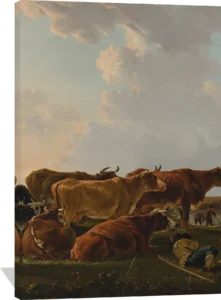
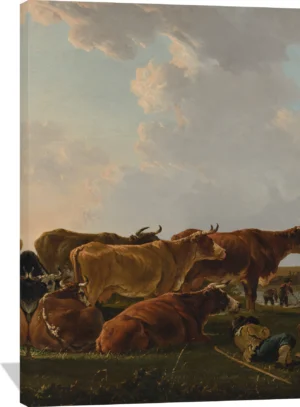
He is best known for his winter scenes, pastoral vistas, cattle studies, and expansive river landscapes. These subjects allowed him to explore atmospheric depth and gentle contrasts between land, water, and sky. Many of his compositions feature figures or animals placed with purposeful clarity, enhancing narrative presence without overwhelming the setting.
Notable Contributions
As a leading artist of Dordrecht’s cultural scene, van Strij played a significant role in sustaining the region’s artistic heritage. His workshop helped nurture local talent, and his commitment to studying nature directly often sketching outdoors strengthened the authenticity of his painted views. His work bridged the sensibilities of earlier Dutch masters with the emerging tastes of his own era, making him a pivotal figure in the continuation of the country’s landscape tradition.
Legacy
Jacob van Strij’s paintings remain valued for their serene beauty and their masterful atmospheric detail. His ability to reinterpret classic Dutch landscape principles while preserving their timeless appeal ensures his place as one of Dordrecht’s most enduring artistic voices.