Artistic Style
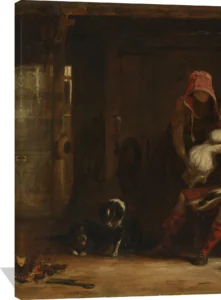
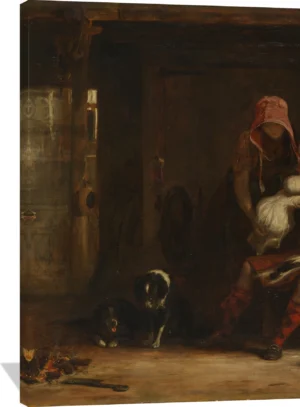
Wilkie’s work is defined by its meticulous craftsmanship, rich narrative quality, and the warm naturalism characteristic of the Romantic period. His ability to orchestrate expressive figures within bustling interior scenes allowed him to infuse ordinary moments with theatrical depth. Throughout his career, he demonstrated an exceptional command of light and texture, often drawing comparisons to the Dutch Golden Age masters he greatly admired.
Subjects and Themes
Best known for his genre scenes, Wilkie depicted domestic gatherings, village festivities, and humble rural interiors with remarkable psychological insight. Works such as The Village Politicians and The Blind Fiddler highlight his gift for storytelling through posture, gesture, and carefully arranged detail. Later in his life, after extensive travel in Europe and the Middle East, his palette grew richer and his compositions more dramatic, revealing a shift toward historical and religious subjects.
Legacy and Significance
Wilkie’s influence on British art was profound. His ability to elevate everyday life into subjects of national interest helped shape the direction of nineteenth‑century genre painting. Admired for his sensitivity to character and atmosphere, he became a leading figure of the Royal Academy and a trusted portraitist and chronicler of contemporary society. Today, his work endures for its human warmth and its finely observed realism, offering a vivid window into the cultural life of his time.