
Abraham’s Parting from the Family of Lot
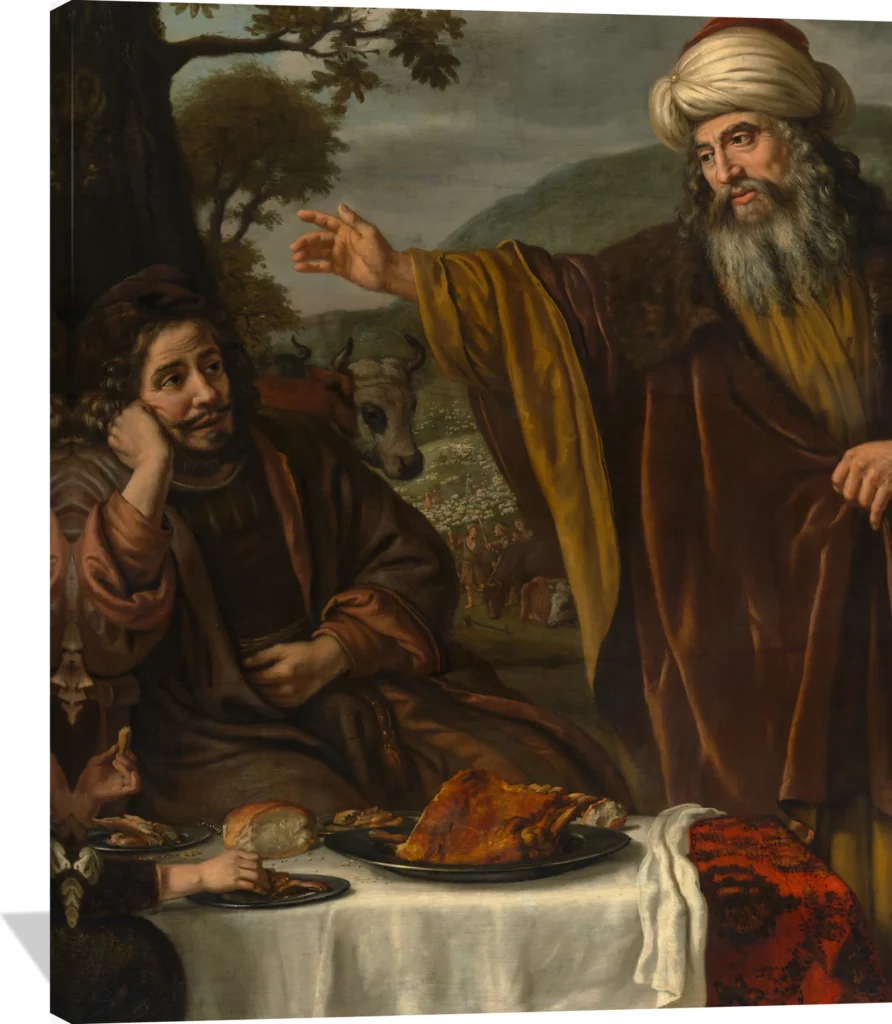
The Jan Victors Abraham’s Parting from the Family of Lot canvas captures a poignant biblical farewell rendered in warm earth tones of amber, russet, and deep olive. Victors’ masterful use of light and expressive faces draws viewers into an intimate moment of emotion and faith, set against a tranquil pastoral backdrop. The painter’s Dutch Golden Age realism imbues the scene with both grandeur and tenderness.
This premium canvas print brings timeless storytelling and refined artistry to your home. Ideal for a living room, study, or entryway, this wall art evokes reflection and heritage, making it a distinguished centerpiece for any classic or contemporary space.
Jan Victors (Amsterdam 1619–1676/77 East Indies) was a Dutch Golden Age painter celebrated for his evocative narrative scenes and sensitive portrayals of biblical subjects. Active in the circle of Rembrandt, he absorbed the master’s dramatic use of light while developing a distinct, emotionally resonant voice of his own.
Artistic Style
Victors is known for his warm, atmospheric palette and keen attention to human expression. His compositions often emphasize gentle illumination, contemplative moods, and intimate storytelling. While echoing Rembrandt’s influence, he favored a slightly more polished, serene approach, creating works that feel both grounded and quietly lyrical.
Subjects and Themes
He specialized in Old Testament narratives, portraiture, and domestic genre scenes. His biblical paintings are marked by tenderness and psychological clarity, depicting familiar stories with understated drama and sincere empathy. In his portraits and everyday interiors, Victors captured the subtleties of character and the quiet dignity of daily life.
Cultural Significance
As a distinguished contributor to the Dutch Golden Age, Victors helped shape the period’s rich visual language of storytelling and naturalism. His work reflects the era’s spiritual introspection and humanist values, offering a window into the beliefs, emotions, and artistic ideals of 17th‑century Amsterdam. Today, he is remembered for his expressive narrative realism and his ability to infuse familiar themes with depth and humanity.
Trust & policies
- 🚚 Free tracked shipping to 45+ countries. Local import duties or taxes may apply in some destinations.
- 🎨 Made-to-order, printed close to your delivery location
- 🛡️ If damaged, defective, or misprinted: free replacement or refund
- 🌍 Printed in US/CA/EU/UK/AU based on delivery location
- 💎 Acid-free, fade-resistant canvas with solid wood stretcher bars
- 🖼️ Optional pine floating frames in white, black, or brown
- 🪝 Ready to hang — hardware pre-installed