Artistic Style
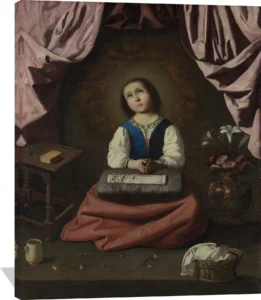
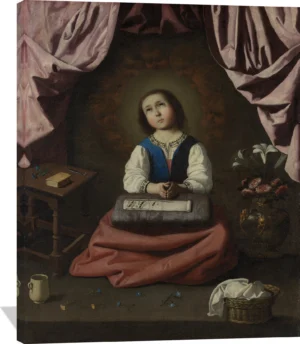
Zurbarán’s style is defined by its sculptural realism, luminous contrasts, and meditative stillness. His use of controlled light against deep shadow gives his figures a monumental presence, while his refined handling of drapery and texture emphasizes both physical detail and spiritual symbolism. Through these qualities, he created a visual language that is both austere and profoundly emotive.
Subjects and Themes
Best known for his religious compositions, Zurbarán frequently depicted saints, monks, and biblical narratives, presenting them with quiet dignity and introspective calm. His still lifes, though fewer in number, are especially admired for their purity of form and contemplative atmosphere. Works such as his depictions of Saint Francis and his series for monastic orders illustrate his ability to transform devotional subjects into powerful, intimate encounters.
Legacy and Significance
Zurbarán’s art reflects the intense spirituality of Counter‑Reformation Spain and holds a central place in Baroque painting. His disciplined approach, combined with a sensitivity to light and texture, influenced generations of artists and continues to resonate with contemporary audiences. Distinguished by its emotional clarity and quiet power, his oeuvre remains a touchstone of Spanish Baroque mastery and a testament to the enduring appeal of contemplative art.