Artistic Style and Approach
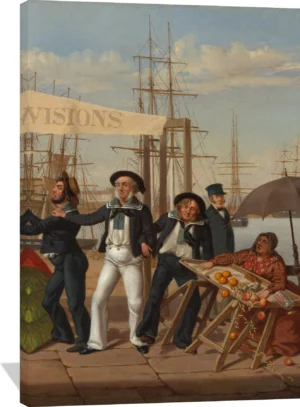
Carlin’s paintings are marked by precise draftsmanship, balanced compositions, and a quietly expressive tone. He often favored intimate scenes rendered with careful attention to gesture, expression, and detail. His style aligned with the genteel realism popular in mid‑century America, yet his sensitivity to human interaction and domestic nuance gave his works a distinctive resonance.
Subjects and Notable Themes
Carlin frequently depicted refined interior settings, portraits, and thoughtful genre scenes that captured the rhythms of everyday life. His paintings convey a calm narrative quality, inviting viewers to linger on small but meaningful moments. Beyond painting, he also produced illustrations and literary works, reflecting a broad creative intelligence shaped in part by the visual attentiveness central to his life and practice.
Cultural and Historical Significance
As a deaf artist who achieved substantial professional recognition in nineteenth‑century America, Carlin holds a notable place in cultural history. He contributed significantly to artistic and intellectual communities, advocating for education and creative opportunity for deaf individuals. His dual influence as a respected painter and an early leader within the deaf community underscores his lasting impact.
Legacy
Today, John Carlin’s work is appreciated for its refinement, its gentle narrative presence, and its place within the broader story of American art. His paintings offer insight into the tastes and social atmosphere of his era while highlighting the achievements of an artist whose perspective enriched the cultural landscape of the nineteenth century.