Artistic Style
Vosmaer’s work is characterized by precise naturalism, harmonious compositions, and an exceptional sensitivity to light. His paintings often display a balanced interplay of vivid blossoms, subtle textures, and sculptural forms. With careful layering and controlled highlights, he created arrangements that feel both serene and vividly present, a hallmark of the emerging Dutch still‑life tradition.
Typical Subjects
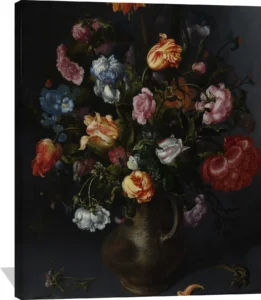
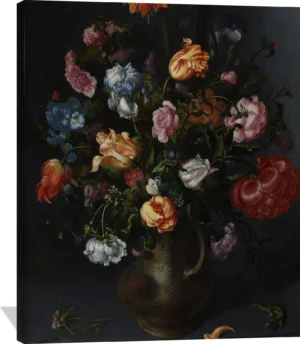
He is best known for his sumptuous floral still lifes, frequently presented in ornate vases or set against dark, atmospheric backgrounds. These arrangements typically feature tulips, roses, irises, and seasonal blooms, rendered with scientific attentiveness. His botanical accuracy reflects the period’s flourishing interest in horticulture and the cultural fascination with rare flowers.
Notable Contributions
As one of Delft’s pioneering flower painters, Vosmaer helped establish the genre during a moment when Dutch patrons were increasingly captivated by luxury goods and the beauty of natural specimens. His paintings demonstrate a sophisticated understanding of composition and color, anticipating stylistic developments that later artists in the Dutch Golden Age would explore more widely. Works such as Vase of Flowers reveal his ability to unite elegance with quiet intensity, contributing to the evolution of still‑life painting as a respected artistic form.
Cultural Significance
Vosmaer’s art reflects the intellectual and economic climate of the Dutch Republic, a society that valued observation, craftsmanship, and the celebration of nature. His paintings stand as enduring examples of the era’s fascination with transience and beauty. Today, he is appreciated for his masterful botanical precision and his role in shaping the early identity of Delft’s artistic community, a legacy that enriches the wider narrative of Dutch Golden Age art.