Artistic Style
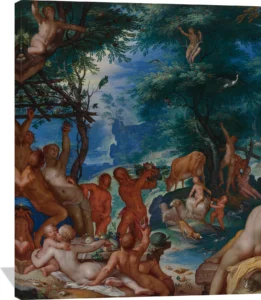
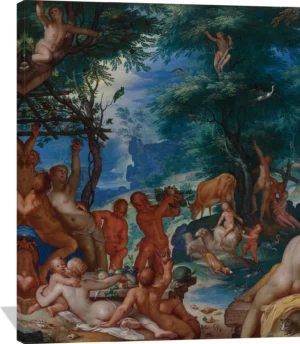
Wtewael’s paintings are characterized by brilliant, enamel-like surfaces, elongated figures, and complex spatial arrangements. His masterful handling of oil and copper supports allowed him to achieve remarkable precision, giving his scenes a jewel-like clarity. As one of the last major proponents of Mannerism in the region, he brought a highly polished and expressive sensibility to both grand mythological narratives and intimate cabinet pictures.
Subjects and Themes
Wtewael is best known for his mythological and biblical compositions, animated by dramatic gestures and vivid storytelling. Works depicting themes such as the Judgment of Paris, the Labors of Hercules, and scenes from Genesis reveal his fascination with classical literature and moral allegory. His figures often appear in dynamic poses and are rendered with striking anatomical detail, heightening the theatrical quality of his narratives.
Legacy and Significance
A prominent citizen of Utrecht and an accomplished artisan trained in his family’s flax-working trade, Wtewael rose to become one of the city’s most respected painters. His art represents the culmination of Northern Mannerism, bridging the ornate elegance of sixteenth-century style with the emergent realism of the Dutch Golden Age. Today, he is recognized for his exceptional craftsmanship and for preserving the expressive brilliance of Mannerist aesthetics well into the seventeenth century.