Artistic Style and Approach
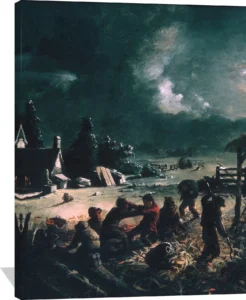
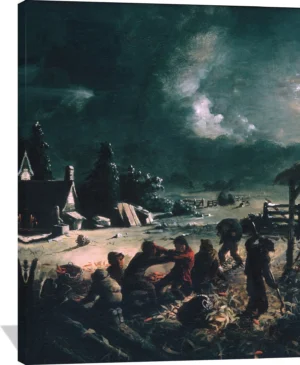
Blythe’s work is characterized by its unvarnished detail, expressive brushwork, and a wry, critical edge. His paintings frequently highlight the tensions of everyday urban life, using exaggerated expressions and carefully staged scenes to underscore political and social critique. This blend of satirical intent with observational accuracy helped establish him as a singular voice among American genre painters.
Subjects and Themes
He depicted politicians, street urchins, medical students, and working‑class figures, often placing them in chaotic interiors or bustling streets. Works such as The Country Politician and Street Urchins exemplify his ability to capture both the vivid texture of daily life and the undercurrents of folly, corruption, or hardship within it. Blythe’s art reveals the complexities of an America undergoing rapid social change, using humor and irony to illuminate deeper truths.
Legacy and Significance
Blythe’s paintings stand out for their bold social insight and their refusal to idealize the world he observed. His commitment to depicting the grit, contradictions, and humanity of his time has secured his reputation as a pioneer of satirical genre painting in the United States. Today, his works are valued not only for their artistic merit but also for their vivid record of antebellum American culture.