
The Dead Christ in the Tomb with Two Angels
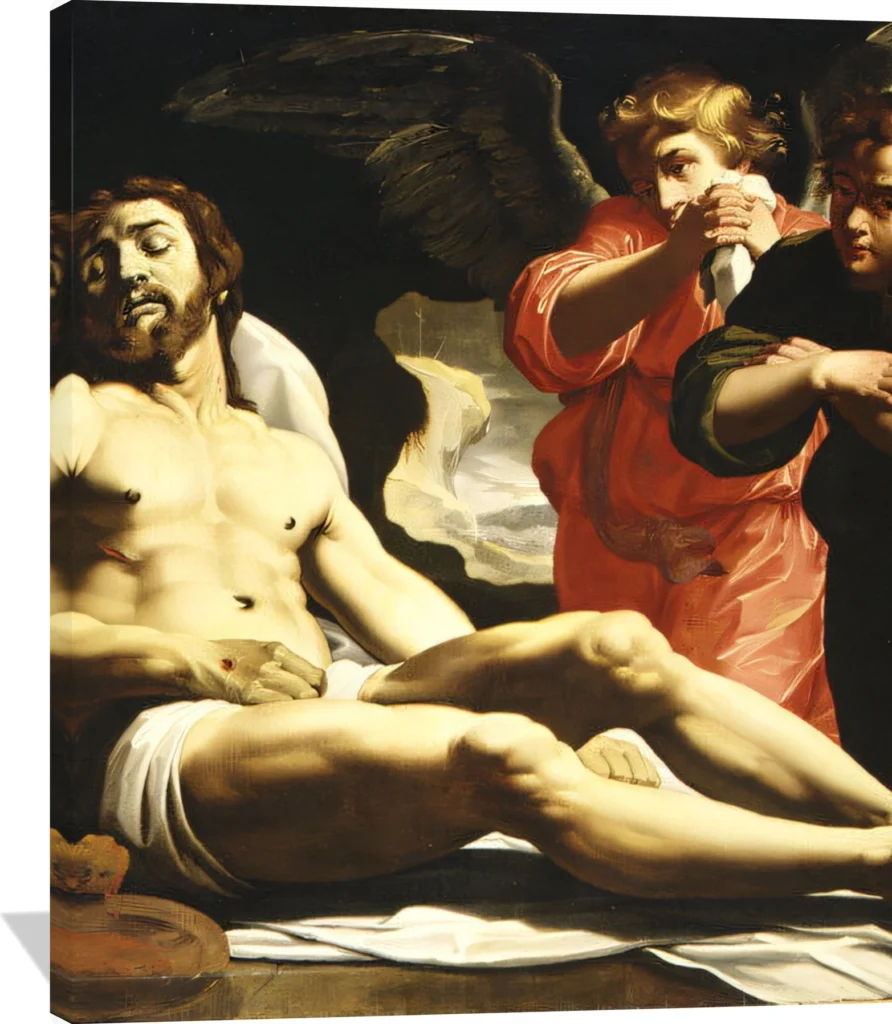
The Abraham Janssen van Nuyssen The Dead Christ in the Tomb with Two Angels canvas captures a moment of profound stillness and divine compassion. Rendered in warm earth tones, deep shadows, and soft golden highlights, this Baroque masterpiece evokes both reverence and serenity. The figures are illuminated with dramatic contrast, emphasizing the sacred tenderness between Christ and the attending angels.
This museum-quality canvas print brings timeless artistry and spiritual depth to any space. Ideal for a living room, study, or entryway, it invites quiet reflection and adds a touch of classical grandeur to your wall art collection.
Abraham Janssen van Nuyssen (Flemish, ca. 1575–1632) was a prominent Antwerp painter whose work reflects the dramatic transformations in Flemish art at the turn of the seventeenth century. Active during the rise of the Baroque, he is recognized for bringing a distinctive blend of Italianate influence and Northern realism to his subjects.
Artistic Style
Janssen’s style is shaped by his exposure to the chiaroscuro traditions of Caravaggio and his circle, which he adapted into a uniquely Flemish idiom. His paintings often feature powerful contrasts of light and shadow, sculptural forms, and a quiet emotional intensity. This synthesis of atmospheric drama and subtle naturalism gives his work a compelling visual depth and marks him as one of the significant early adopters of Caravaggism in the Southern Netherlands.
Subjects and Themes
He is best known for religious compositions, mythological scenes, and expressive figure studies. His saints, prophets, and classical characters emerge with a strong physical presence, rendered with careful attention to anatomy and texture. Even in multi-figure arrangements, Janssen maintains a sense of solemn focus, allowing viewers to engage deeply with the narrative moment. Works such as The Penitent Saint Jerome and Susanna and the Elders exemplify his ability to fuse storytelling with atmospheric drama.
Contribution and Legacy
As one of the earliest Flemish painters to embrace the bold tonal contrasts associated with Caravaggist painting, Janssen played a notable role in shaping the visual trajectory of the Antwerp school. His approach offered an alternative to the high dynamism then emerging under Peter Paul Rubens, emphasizing instead a more introspective and sculptural sensibility. This balance of Northern detail and Italian influence positioned him as a bridge between two major artistic traditions.
Cultural Significance
Operating within one of Europe’s most vibrant artistic centers, Janssen contributed to the flourishing of Flemish Baroque painting during a period of profound cultural and religious change. His works continue to attract attention for their technical restraint, psychological nuance, and their place within the broader movement of early seventeenth‑century Caravaggism. Today, he is appreciated for his role in shaping the expressive vocabulary of Flemish art and for the enduring resonance of his quietly dramatic compositions.
Trust & policies
- 🚚 Free tracked shipping to 45+ countries. Local import duties or taxes may apply in some destinations.
- 🎨 Made-to-order, printed close to your delivery location
- 🛡️ If damaged, defective, or misprinted: free replacement or refund
- 🌍 Printed in US/CA/EU/UK/AU based on delivery location
- 💎 Acid-free, fade-resistant canvas with solid wood stretcher bars
- 🖼️ Optional pine floating frames in white, black, or brown
- 🪝 Ready to hang — hardware pre-installed