
The Vocation of Saint Aloysius (Luigi) Gonzaga
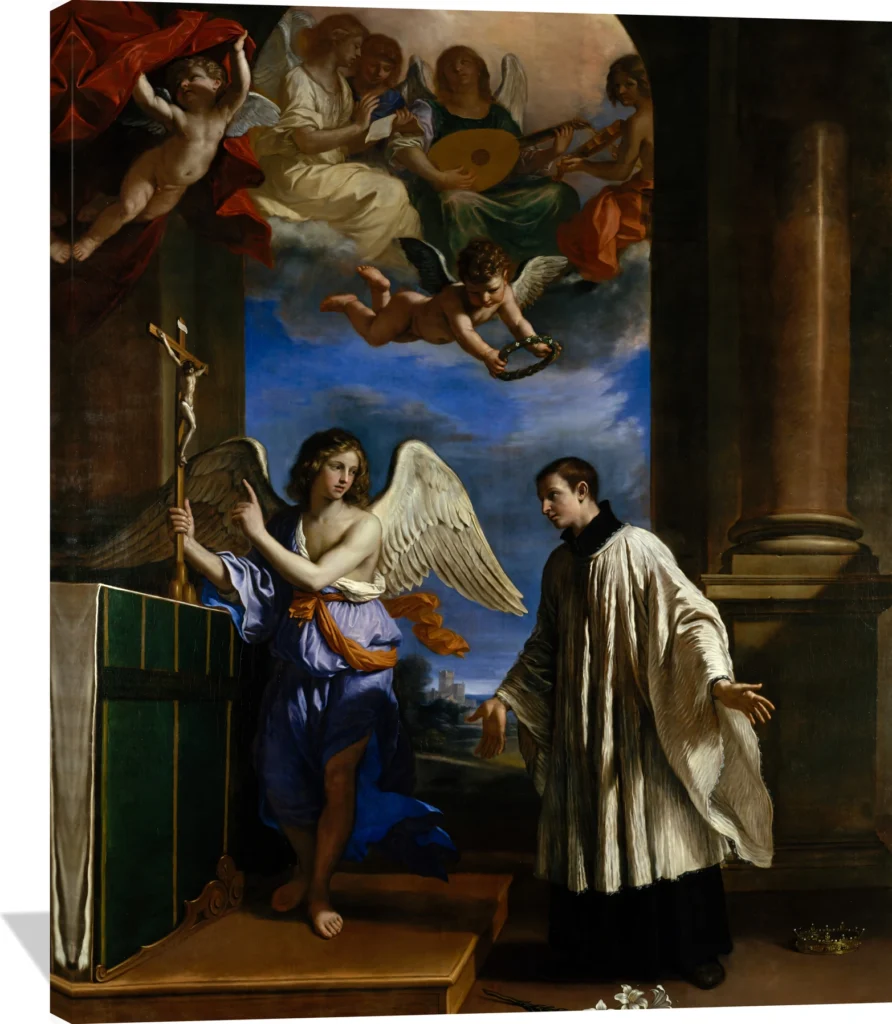
The Guercino The Vocation of Saint Aloysius (Luigi) Gonzaga canvas captures a luminous Baroque vision of divine calling and devotion. Bathed in rich tones of gold, ivory, deep blue, and soft violet, the composition contrasts celestial radiance with earthly humility. Guercino’s masterful use of light and shadow heightens the spiritual drama, drawing the viewer into a moment of revelation and grace.
This exquisite wall art brings timeless elegance and contemplative beauty to any space. Perfect for a living room, study, or entryway, this canvas print honors the Italian master’s gift for emotional depth and sacred grandeur, transforming your walls into a window to the divine.
Giovanni Francesco Barbieri, known as Guercino, was an influential Italian Baroque painter from Cento whose career flourished between the early and mid‑seventeenth century. Active primarily in Cento and later Bologna, he became celebrated for a dynamic style that blended emotional intensity with masterful draftsmanship.
Artistic Style
Guercino’s work is distinguished by dramatic chiaroscuro, vibrant color harmonies, and fluid, expressive brushwork. His compositions often feature sweeping movement and heightened emotional presence, hallmarks of the Baroque search for immediacy and spiritual resonance. A gifted draftsman, he produced an extensive body of drawings that reveal remarkable sensitivity to light, form, and human expression.
Subjects and Contributions
Guercino created a wide range of religious and mythological paintings, capturing both intimate devotion and grand narrative drama. His figures display a compelling blend of naturalism and lyrical grace. Early masterpieces such as The Burial of Saint Petronilla established his reputation for powerful storytelling, while later altarpieces and frescoes in Bologna highlight his evolving elegance and compositional clarity.
Cultural Significance
A central figure of the Italian Baroque, Guercino influenced generations of artists through his inventive use of light and his commanding sense of movement. His workshop in Cento became a vital artistic center, and his works were sought after by patrons across Italy and beyond. Today, he is recognized for his ability to unite emotional depth with technical brilliance, securing his place as a master of the seventeenth century and a guiding force in the development of the Baroque’s expressive realism.
Trust & policies
- 🚚 Free tracked shipping to 45+ countries. Local import duties or taxes may apply in some destinations.
- 🎨 Made-to-order, printed close to your delivery location
- 🛡️ If damaged, defective, or misprinted: free replacement or refund
- 🌍 Printed in US/CA/EU/UK/AU based on delivery location
- 💎 Acid-free, fade-resistant canvas with solid wood stretcher bars
- 🖼️ Optional pine floating frames in white, black, or brown
- 🪝 Ready to hang — hardware pre-installed