
Saint Francis
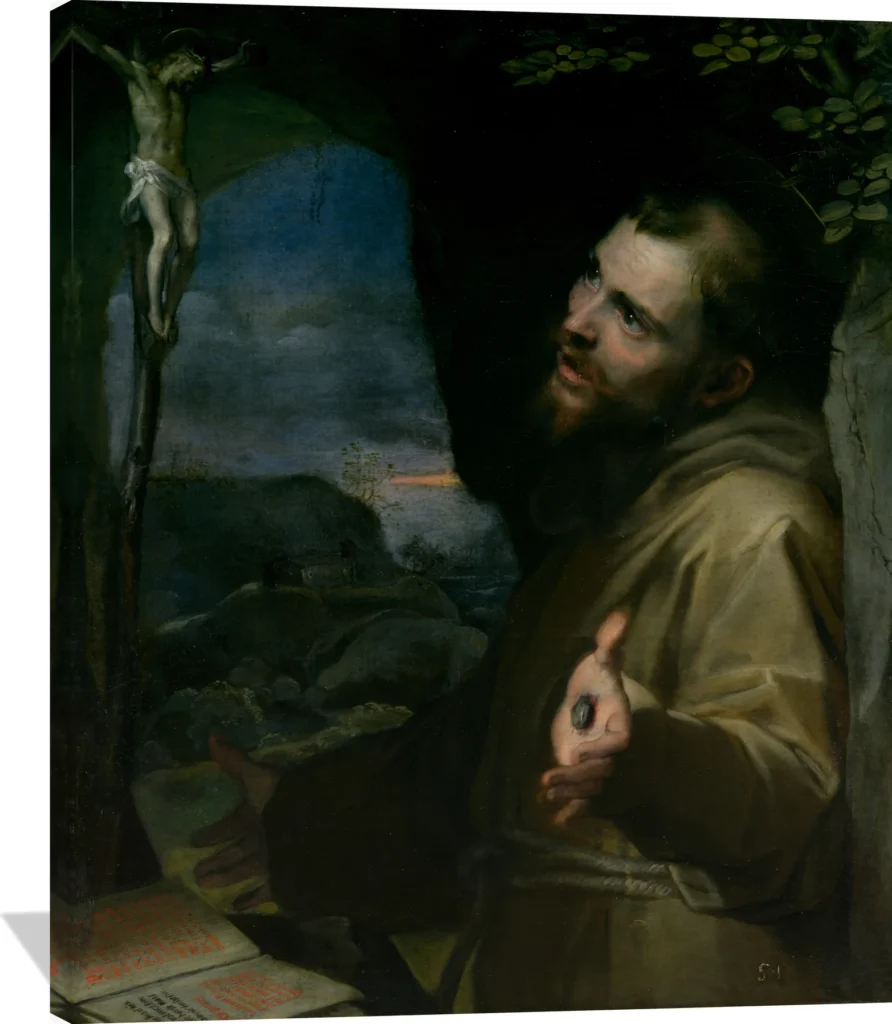
The Federico Barocci Saint Francis canvas captures a moment of deep spiritual devotion, rendered in Barocci’s signature blend of warmth and luminosity. Earthy browns, soft golds, and gentle blues create a contemplative atmosphere as Saint Francis gazes upward in divine reflection. The composition’s vertical orientation and tender light evoke serenity and grace, making it a timeless centerpiece for any interior.
This museum-quality Saint Francis wall art brings Renaissance reverence into modern spaces. Ideal for a living room, study, or entryway, this exquisite canvas print invites quiet reflection and adds a touch of sacred beauty to your home décor.
Federico Barocci (Urbino, ca. 1535–1612) was a leading figure of late Renaissance and early Baroque painting, celebrated for his luminous color, refined emotion, and innovative compositions. Trained in Urbino and influenced by masters of the High Renaissance, he forged a distinctive style that blended expressive movement with gentle spiritual intensity.
Artistic Style
Barocci is renowned for his radiant palette, delicate modeling of light, and harmonious interplay of gesture and gaze. His paintings often reveal a subtle, atmospheric softness that makes figures appear both vivid and ethereal. These qualities helped shape the transition toward the emerging Baroque sensibility, particularly through his use of dynamic diagonals and compelling emotional resonance.
Subjects and Themes
While he worked across genres, Barocci is most celebrated for his devotional works and altarpieces. His portrayals of the Virgin and Child, saints, and scenes from the life of Christ are marked by tenderness and human warmth. Even in narrative settings, he emphasized empathy and inner life, inviting viewers into a contemplative experience rather than a purely dramatic one.
Legacy and Significance
Barocci’s influence extended across Italy, inspiring artists who sought a balance between Renaissance clarity and the emerging vigor of the Baroque. His meticulous preparatory studies, including pastels and oil sketches, reflect a deep commitment to natural observation and emotional truth. Today, he is recognized as a pivotal figure whose art embodies the graceful shift from Renaissance refinement to the expressive force of the seventeenth century, a legacy that continues to shape the appreciation of this transformative artistic era.
Trust & policies
- 🚚 Free tracked shipping to 45+ countries. Local import duties or taxes may apply in some destinations.
- 🎨 Made-to-order, printed close to your delivery location
- 🛡️ If damaged, defective, or misprinted: free replacement or refund
- 🌍 Printed in US/CA/EU/UK/AU based on delivery location
- 💎 Acid-free, fade-resistant canvas with solid wood stretcher bars
- 🖼️ Optional pine floating frames in white, black, or brown
- 🪝 Ready to hang — hardware pre-installed