
Parrot on a Pear Branch
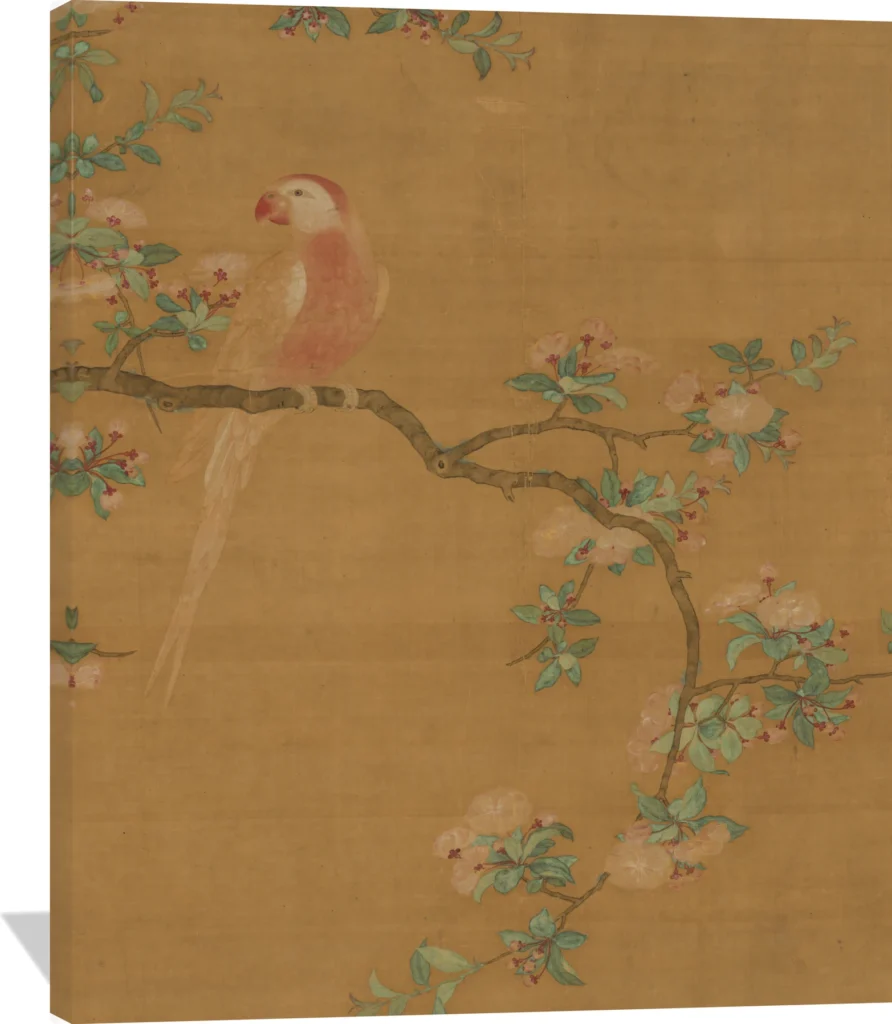
The Jin Zunnian Parrot on a Pear Branch canvas captures the serene elegance of early 18th-century Chinese artistry. A soft-hued parrot rests gracefully among blooming pear blossoms, rendered in delicate shades of peach, jade green, and warm ochre. The composition’s tranquil balance and refined brushwork evoke a timeless sense of harmony and natural beauty.
This exquisite wall art brings a touch of classical sophistication to any space—perfect for a living room, study, or entryway. The Parrot on a Pear Branch canvas print offers a refined focal point that celebrates both nature’s grace and the enduring artistry of Jin Zunnian.
Jin Zunnian, a Chinese painter active in the early eighteenth century, is recognized for his refined approach to literati aesthetics during a period marked by flourishing artistic diversity. Although historical records of his life are limited, his surviving works reflect the intellectual and poetic spirit that defined Qing dynasty painting culture.
Artistic Style
Jin Zunnian’s style is distinguished by its elegant brushwork and contemplative restraint. He employed controlled ink tones that balance clarity with atmosphere, demonstrating an affinity for the literati tradition while integrating the subtle precision associated with court-influenced techniques. His compositions often reveal a thoughtful interplay between emptiness and form, creating a sense of quiet sophistication.
Typical Subjects
The artist’s subjects commonly include serene landscapes, scholar retreats, and natural elements rendered with poetic sensitivity. Figures and architectural elements appear sparingly, used primarily to anchor the surrounding scenery and evoke narrative depth. His landscapes often convey a meditative mood, inviting viewers into imagined spaces shaped by scholarly ideals.
Notable Contributions
Jin Zunnian contributed to the continuation of classical painting values during an era when artists negotiated tradition and innovation. His work reflects the disciplined brush techniques passed down through earlier masters while embracing the Qing period’s broadened appreciation for expressive, artist-centered interpretation. This balance positions him as a meaningful participant in the evolving visual culture of the time.
Cultural Significance
Though not widely documented, Jin Zunnian’s paintings embody the refined sensibilities associated with Qing dynasty ink art. His emphasis on harmony, lyrical imagery, and conceptual clarity resonates with collectors who appreciate the quiet power of literati expression. Today, his work is valued for its connection to China’s rich artistic lineage and its embodiment of scholarly elegance and technical finesse that continue to influence connoisseurs of classical Chinese painting.
Trust & policies
- 🚚 Free tracked shipping to 45+ countries. Local import duties or taxes may apply in some destinations.
- 🎨 Made-to-order, printed close to your delivery location
- 🛡️ If damaged, defective, or misprinted: free replacement or refund
- 🌍 Printed in US/CA/EU/UK/AU based on delivery location
- 💎 Acid-free, fade-resistant canvas with solid wood stretcher bars
- 🖼️ Optional pine floating frames in white, black, or brown
- 🪝 Ready to hang — hardware pre-installed