Artistic Style
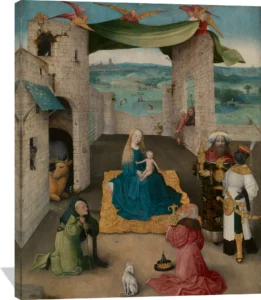
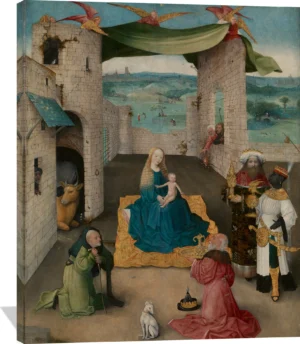
Bosch’s paintings are defined by intricate detail, otherworldly creatures, and atmospheric landscapes that blur the boundary between the earthly and the spiritual. His work combines late medieval symbolism with an unprecedented level of invention, resulting in scenes that feel both moralizing and dreamlike. At a time when many artists focused on naturalism, Bosch forged a distinctive visual language, marked by bold imagination and a haunting psychological depth.
Typical Subjects
Drawn to themes of morality, temptation, and human folly, Bosch often depicted religious narratives in unconventional ways. His multi‑panel compositions teem with symbolic figures, hybrid animals, and surreal architectural forms. Works such as The Garden of Earthly Delights exemplify his ability to transform traditional Christian allegory into an immersive world populated by bizarre yet meticulously rendered scenes. Even in smaller devotional pieces, his imagery invites contemplation of sin, redemption, and the fragile nature of the human soul.
Notable Contributions
Bosch’s innovative iconography made him a singular figure in European art. His willingness to push beyond the visual norms of his time opened new possibilities for depicting psychological and spiritual experience. His influence reached far beyond the Netherlands, inspiring artists across generations, from early modern painters to later surrealists who admired his unrestrained imaginative power. Bosch’s ability to fuse moral instruction with startling fantasy helped establish him as a pioneer of visionary art.
Cultural and Historical Significance
As a member of the Brotherhood of Our Lady, Bosch worked within a deeply religious context, yet his work transcended devotional function to reflect broader cultural anxieties of the late medieval period. His depictions of chaos, temptation, and human vulnerability resonate with timeless potency. Today, he is celebrated not only for his technical mastery but also for his unparalleled imaginative vision, which continues to influence contemporary visual culture. Bosch remains a central figure in art history, his paintings offering a window into both the spiritual concerns of his era and the boundless possibilities of artistic creation.