Artistic Style and Approach
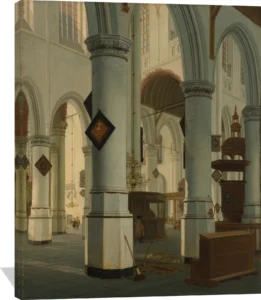
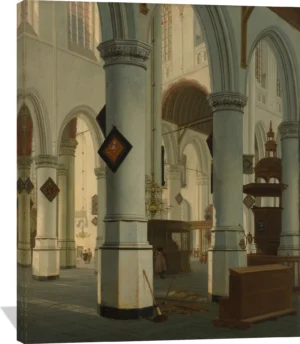
Van Vliet specialized in capturing the soaring architecture of Dutch Protestant churches, rendering vast interiors with remarkable clarity and control. His paintings are distinguished by their exacting linear perspective, delicate play of light and shadow, and subtle attention to detail. The artist’s refined realism and measured compositions give his works a sense of balance and quiet grandeur, often emphasizing structural harmony and spiritual calm.
Subjects and Themes
While Van Vliet occasionally painted portraits and other subjects early in his career, he is best known for his evocative depictions of Delft’s monumental spaces, including the Nieuwe Kerk and Oude Kerk. He frequently portrayed funerary monuments, memorial slabs, and the polished floors that reflect the filtered daylight so characteristic of his interiors. These elements deepen the mood of reverence and contemplation that defines his oeuvre.
Legacy and Significance
Hendrick van Vliet’s work stands at the intersection of artistic skill and cultural history, offering a vivid visual record of the architectural splendor of 17th‑century Delft. His calm, light-filled interiors influenced contemporaries and later generations of architectural painters, securing his place as a significant figure in the Dutch Golden Age. Celebrated for his masterful perspective and serene atmosphere, Van Vliet’s paintings remain enduring testaments to the elegance and precision of Dutch art.