Artistic Style
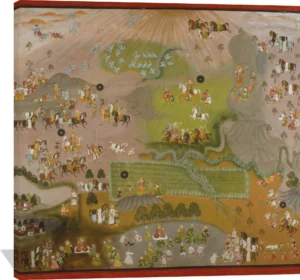
Their work reflects the hallmarks of late Mughal and Company School aesthetics: precise linework, delicate shading, and an attentive rendering of textiles, jewelry, and architectural ornament. Shiva and Dayal excelled in creating finely detailed compositions that balanced naturalistic observation with the lyrical stylization characteristic of Indian miniature painting.
Subjects and Themes
Their artworks frequently portrayed royal life, ceremonial scenes, portraits, and depictions of daily activities, capturing the visual identity of a society in transition. Flora, fauna, and carefully arranged interior settings often appear in their compositions, revealing a deep engagement with both traditional narrative imagery and the growing interest in empirical study introduced through colonial influence.
Cultural and Historical Significance
Shiva and Dayal’s contributions lie in their ability to preserve classical Indian artistic language while adapting to new aesthetic expectations. Their paintings document the cultural hybridity of the period, bridging courtly patronage and the tastes of emerging global audiences. Through their skilled draftsmanship and nuanced use of color, they helped shape the visual record of an era, leaving works that remain valued for their beauty, historical insight, and enduring craftsmanship.