Artistic Style and Approach
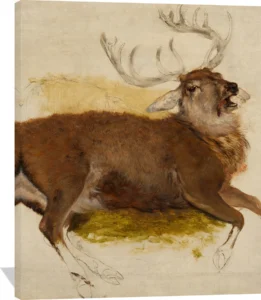
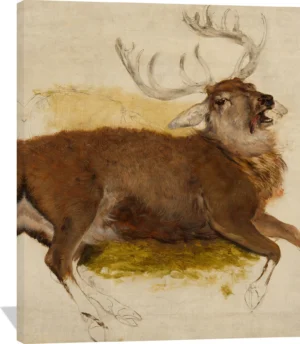
Landseer’s style is distinguished by its meticulous realism, refined draftsmanship, and an ability to imbue animal subjects with subtle human emotion. His paintings often balance naturalistic detail with a poetic sensibility, making his work resonate far beyond straightforward animal portraiture. He excelled at capturing texture, anatomy, and character, bringing viewers into intimate contact with the creatures he portrayed.
Notable Subjects and Themes
Best known for his evocative depictions of dogs, stags, and other wildlife, Landseer often used animals as reflections of human virtues, struggles, and emotional states. Works such as the iconic The Monarch of the Glen reveal his ability to merge dramatic composition with symbolic resonance. His imagery of the Scottish Highlands played a key role in shaping the romantic vision of Scotland during the 19th century.
Legacy and Cultural Significance
A favorite of Queen Victoria and the wider Victorian public, Landseer became a defining artistic voice of his time. His monumental lion sculptures at the base of Trafalgar Square remain among London’s most recognizable landmarks, underscoring his influence beyond painting. Celebrated for his emotional realism and his role in elevating animal subjects within fine art, Landseer’s work continues to captivate viewers with its power, elegance, and enduring cultural impact.