Artistic Style
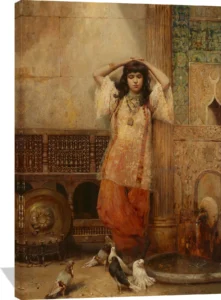
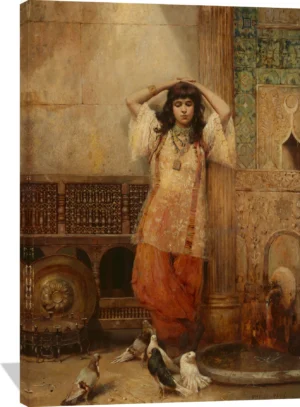
Pavy’s work reflects the refined naturalism favored in France during the late 1800s, often characterized by attentive rendering, balanced compositions, and a nuanced approach to light. While aligned with academic techniques, his paintings show a sensitivity to atmosphere, hinting at the broader artistic shift toward more personal and expressive interpretations of everyday scenes.
Subjects and Themes
Although few of his works survive, Pavy is associated with subjects common among painters of his generation: intimate figure studies, quiet domestic moments, and landscapes capturing the gentle luminosity of the Mediterranean region. His choice of motifs highlights an interest in subtle emotional resonance rather than grand narratives, elevating the ordinary through careful observation and measured elegance.
Legacy and Significance
Pavy’s early death limited the development of his career, yet the works attributed to him demonstrate a disciplined technique and a perceptive eye. He contributed to the rich tapestry of nineteenth‑century French painting, standing among the artists who helped bridge classical conventions and the more exploratory approaches that would soon flourish. Today, collectors value his art for its quiet sophistication and its ability to convey atmosphere with restrained yet evocative detail.