
The Sacrifice of Polyxena
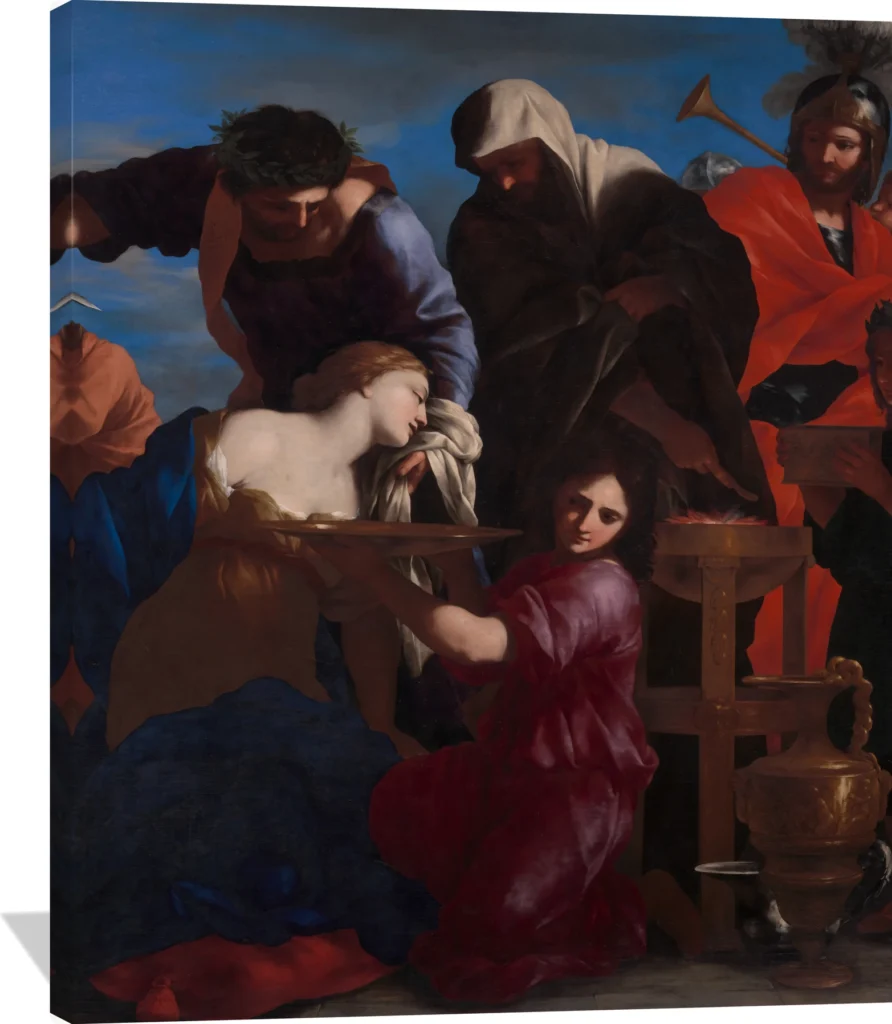
The Giovanni Francesco Romanelli The Sacrifice of Polyxena canvas captures a moment of poignant drama rendered in luminous Baroque color and masterful composition. Deep blues, crimson reds, and warm golds unfold against a serene sky, creating a striking balance between tragedy and grace. Romanelli’s refined brushwork and theatrical lighting bring emotional depth to this classical narrative.
This museum-quality canvas print adds timeless sophistication to any interior. Ideal for a living room, study, or grand entryway, it invites contemplation and admiration with every glance—a powerful centerpiece for collectors of fine art and lovers of Italian Baroque elegance.
Giovanni Francesco Romanelli (ca. 1610–1662) was an influential Italian painter from Viterbo, celebrated for his refined Baroque style and close ties to Rome’s artistic circles. Trained under Pietro da Cortona, Romanelli absorbed the graceful dynamism and luminous palette characteristic of the High Baroque, yet developed a distinctly elegant, measured approach that set his work apart.
Artistic Style
Romanelli’s paintings are known for their polished clarity, harmonious compositions, and a gentle radiance that reflects the transition from the exuberant Roman Baroque to a more courtly, serene aesthetic. His figures are poised and graceful, rendered with smooth contours and a controlled sense of movement. This combination of subtle drama and refined execution made him a favored painter among Roman elites and European patrons.
Subjects and Notable Contributions
He specialized in mythological and religious narratives, often portraying scenes from the lives of saints, classical legends, and episodes from the Bible. Romanelli’s storytelling is marked by visual clarity and emotional restraint, offering viewers an accessible yet dignified interpretation of complex themes. His fresco cycles and panel paintings frequently feature richly colored drapery, expressive but composed gestures, and carefully balanced architectural settings.
Cultural and Historical Significance
During his career, Romanelli completed important commissions for noble families and papal patrons, which helped spread his influence beyond Rome. His work contributed to shaping a more refined branch of Baroque painting, blending grandeur with a courtly elegance that would resonate with later generations of artists. Today, his paintings are valued for their beauty, craftsmanship, and their role in defining a sophisticated, radiant vision of seventeenth-century Italian art.
Trust & policies
- 🚚 Free tracked shipping to 45+ countries. Local import duties or taxes may apply in some destinations.
- 🎨 Made-to-order, printed close to your delivery location
- 🛡️ If damaged, defective, or misprinted: free replacement or refund
- 🌍 Printed in US/CA/EU/UK/AU based on delivery location
- 💎 Acid-free, fade-resistant canvas with solid wood stretcher bars
- 🖼️ Optional pine floating frames in white, black, or brown
- 🪝 Ready to hang — hardware pre-installed