
Malle Babbe
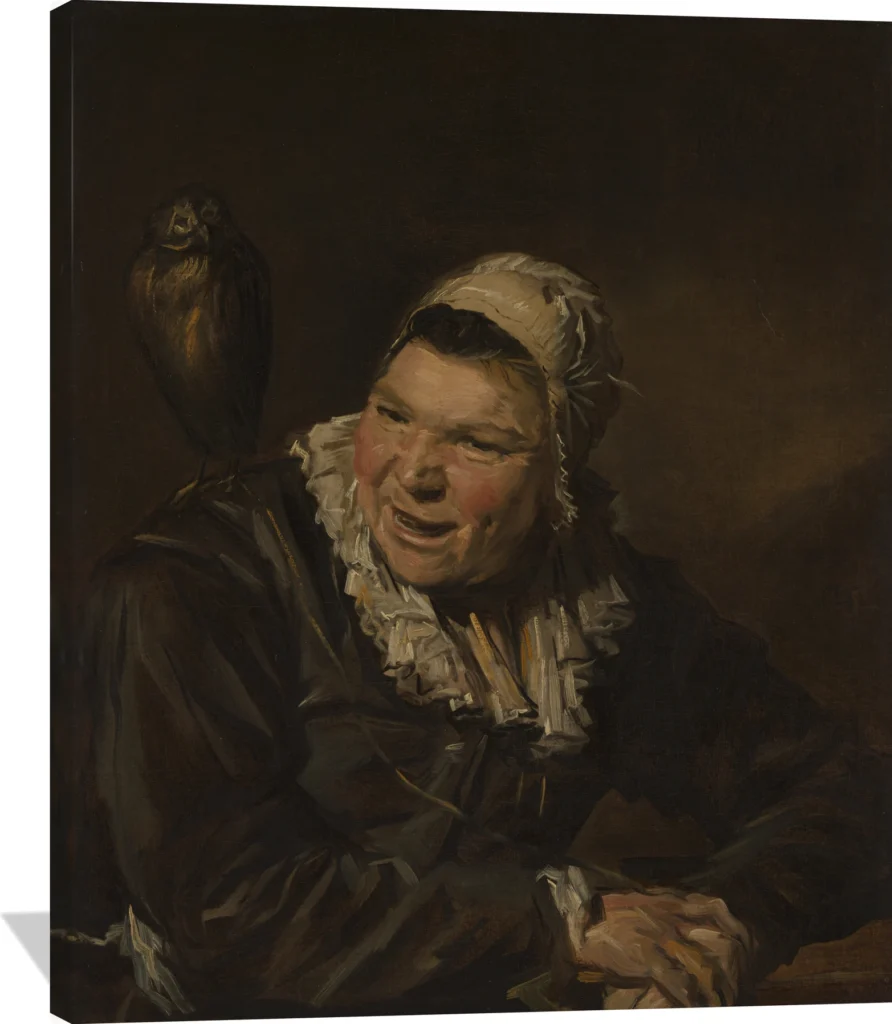
The Frans Hals Malle Babbe canvas captures the spirited warmth and humor of Dutch Golden Age portraiture. Bathed in rich browns, warm flesh tones, and soft golden highlights, this expressive wall art brings to life a moment of laughter and character under Hals’s masterful brushwork. The lively figure and her feathered companion exude charm and authenticity, making this piece a conversation starter in any space.
Perfect for a living room, study, or entryway, this premium canvas print celebrates the artistry of Frans Hals, Dutch master of the second quarter of the 17th century. A timeless addition for collectors who appreciate bold personality and classic elegance in their décor.
Frans Hals (Dutch, Antwerp 1582/83–1666 Haarlem) was one of the most spirited and influential portraitists of the Dutch Golden Age, celebrated for his vivid brushwork and remarkable ability to capture fleeting expressions.
Artistic Style
Hals is renowned for his loose, lively technique, characterized by confident strokes that convey immediacy and presence. His mastery of naturalistic lighting and spontaneous gesture helped define a new, dynamic visual language in seventeenth‑century portraiture, making him a pivotal figure in the evolution of European painting.
Subjects and Contributions
Best known for his portraits of Haarlem’s civic guards, wealthy merchants, and everyday townspeople, Hals brought individuality and warmth to each sitter. Works such as his militia group portraits and expressive character studies, including the spirited The Laughing Cavalier, display his talent for capturing personality with striking clarity. His approach influenced later generations of artists, including the Impressionists, who admired his energetic handling of paint.
Cultural Significance
As a central figure of the Dutch Golden Age, Hals played a key role in shaping the era’s artistic identity. His ability to portray humanity with both vitality and psychological depth remains a defining contribution to Western art. Today, he is celebrated for his innovative technique, enduring influence, and the unmistakable liveliness that distinguishes his work as that of a master portraitist.
Trust & policies
- 🚚 Free tracked shipping to 45+ countries. Local import duties or taxes may apply in some destinations.
- 🎨 Made-to-order, printed close to your delivery location
- 🛡️ If damaged, defective, or misprinted: free replacement or refund
- 🌍 Printed in US/CA/EU/UK/AU based on delivery location
- 💎 Acid-free, fade-resistant canvas with solid wood stretcher bars
- 🖼️ Optional pine floating frames in white, black, or brown
- 🪝 Ready to hang — hardware pre-installed