Artistic Style and Approach
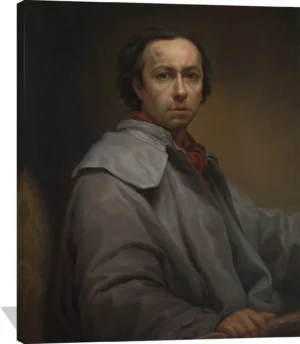
Mengs is celebrated for his disciplined draftsmanship, balanced compositions, and pursuit of ideal beauty inspired by ancient sculpture and High Renaissance masters. His paintings embody a measured elegance, merging precise contour with a cool, luminous palette. This synthesis gave his work a distinctly rational yet expressive character, making him a central voice of the emerging Neoclassical aesthetic and a champion of artistic reform.
Typical Subjects and Notable Contributions
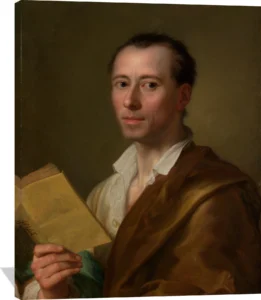
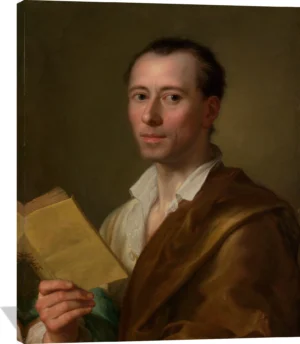
Mengs excelled in portraiture, religious scenes, and allegorical compositions, often imbuing his sitters and narratives with a serene, sculptural presence. His portraits of European nobility reflect an elevated psychological clarity, while his religious works and mythological subjects reveal a dedication to classical ideals. His fresco The Apotheosis of Trajan and celebrated painting Parnassus exemplify his commitment to disciplined form and intellectual sophistication.
Cultural and Historical Significance
A close associate of leading antiquarian Johann Joachim Winckelmann, Mengs played a key role in articulating the theoretical foundation of Neoclassicism. His writings and teaching influenced a generation of artists, spreading the belief that art should aspire to the purity and moral clarity of antiquity. Revered in his time as a model of artistic integrity, he remains a pivotal figure whose work bridges the Baroque and the modern academic tradition.