Artistic Style and Approach
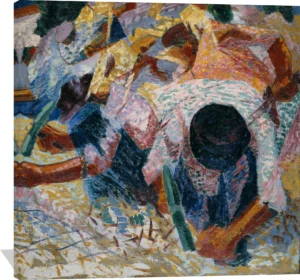
Boccioni’s work is marked by a vigorous exploration of motion and the shifting rhythms of modern life. Merging elements of Cubism and Divisionism into a distinctly Futurist language, he pursued a visual vocabulary that emphasized fluidity, speed, and the interpenetration of forms. His paintings and sculptures often appear to spiral, fracture, or surge forward, reflecting his conviction that all matter is in constant transformation. This pursuit led to groundbreaking compositions such as The City Rises and the iconic sculptural study Unique Forms of Continuity in Space, which embody his dedication to capturing living, continuous movement.
Subjects and Themes
Boccioni drew inspiration from the rapidly industrializing world around him. Urban construction sites, bustling streets, and the sensory intensity of modern experience were central to his practice. He portrayed the human figure not as a static entity but as an energetic force woven into its environment. Through this approach, he sought to reveal the invisible vibrations of life, merging subject and setting into a single dynamic whole.
Cultural and Historical Significance
As a leading theorist of Futurism, Boccioni played a crucial role in shaping the movement’s core principles. His writings and manifestos articulated a vision of art that rejected tradition and embraced the vitality of the new age. Though his career was cut short, his innovations in both painting and sculpture exerted a lasting influence on modern art. Boccioni’s drive to redefine form, space, and perception remains a touchstone for understanding the evolution of abstraction and the broader ambitions of the avant‑garde. His legacy endures as a testament to the power of artistic reinvention and the relentless pursuit of modern expression.