
Equestrian Portrait of Cornelis (1639–1680) and Michiel Pompe van Meerdervoort (1638–1653) with Their Tutor and Coachman
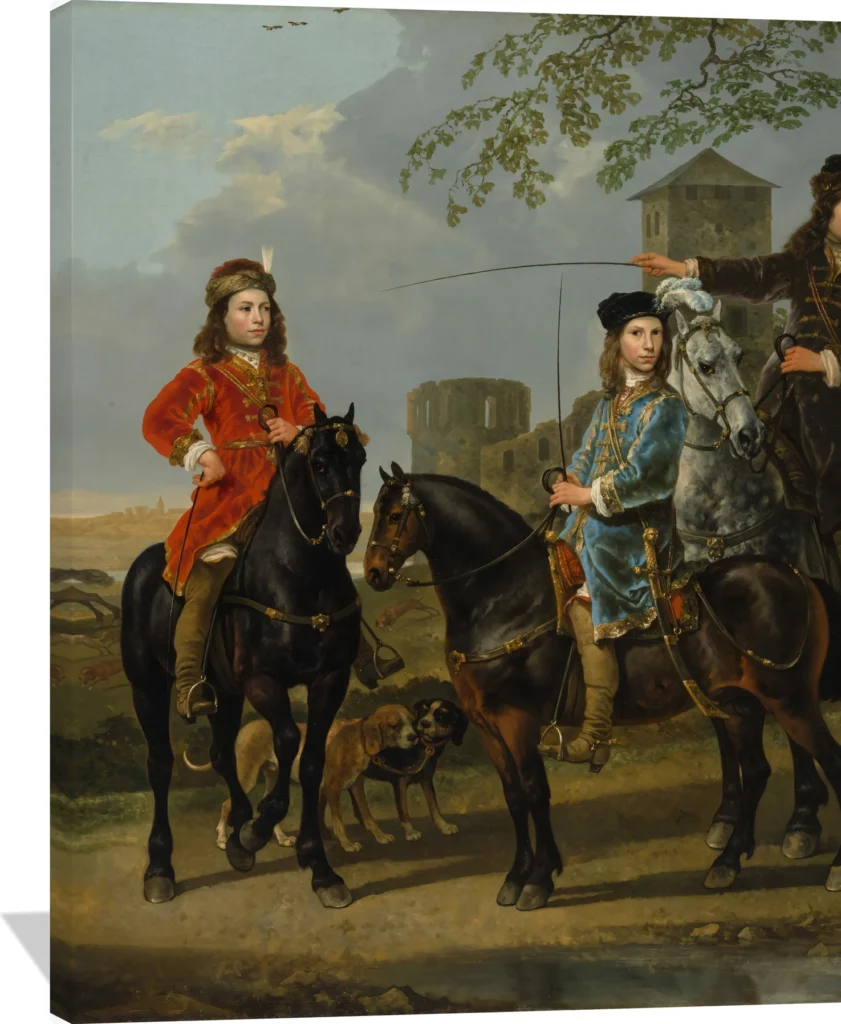
The Aelbert Cuyp Equestrian Portrait of Cornelis (1639–1680) and Michiel Pompe van Meerdervoort (1638–1653) with Their Tutor and Coachman canvas captures the elegance and grandeur of Dutch Golden Age portraiture. Bathed in soft natural light, this masterful composition features noble riders in richly detailed attire, set against a serene pastoral landscape of warm earth tones, sky blues, and deep greens.
This timeless canvas print brings sophistication and historical depth to any interior. Perfect for a study, living room, or entryway, it evokes a sense of refinement and calm—an exquisite statement piece that celebrates Cuyp’s mastery of light, texture, and dignified storytelling.
Aelbert Cuyp (1620–1691), born and active in Dordrecht, stands among the most admired painters of the Dutch Golden Age. Renowned for his masterful command of light and atmosphere, he created luminous landscapes that continue to shape the way viewers imagine the 17th‑century Dutch countryside.
Artistic Style
Cuyp’s paintings are distinguished by their warm, golden illumination and serene sense of harmony. His refined use of chiaroscuro and softly diffused light lends his scenes a tranquil, almost poetic character. The balance he achieved between naturalistic detail and glowing, idealized tone places him among the era’s most influential landscape painters.
Subjects and Themes
Though he painted portraits and still lifes, Cuyp is best known for expansive river views, pastoral settings, and atmospheric rural vistas. He often depicted cattle, horsemen, and travelers set against vast skies and gentle terrains, creating compositions that feel both grounded in daily life and elevated by his distinctive radiance. Works such as The Maas at Dordrecht demonstrate his ability to infuse ordinary subjects with quiet grandeur.
Cultural and Historical Significance
Cuyp was celebrated in his time within Dordrecht, but his wider acclaim blossomed in the 18th and early 19th centuries, particularly in England, where collectors prized his glowing landscapes. His influence can be seen in the work of later English painters, especially those who admired his atmospheric depth and delicate handling of light. Today, Cuyp’s paintings remain appreciated for their clarity, warmth, and the sense of calm they bring to the viewer.
What Makes His Work Distinctive
Cuyp’s enduring appeal lies in his ability to merge realistic observation with an elevated, almost luminous serenity. His landscapes do more than record a place; they capture a mood, a suspended moment shaped by sunlight and stillness. This harmonious blend of naturalism and idealization secures his position as a master of Dutch landscape painting and a continuing source of inspiration for artists and collectors alike.
Trust & policies
- 🚚 Free tracked shipping to 45+ countries. Local import duties or taxes may apply in some destinations.
- 🎨 Made-to-order, printed close to your delivery location
- 🛡️ If damaged, defective, or misprinted: free replacement or refund
- 🌍 Printed in US/CA/EU/UK/AU based on delivery location
- 💎 Acid-free, fade-resistant canvas with solid wood stretcher bars
- 🖼️ Optional pine floating frames in white, black, or brown
- 🪝 Ready to hang — hardware pre-installed