
Portrait of a Boy, Probably of the Crossfield Family
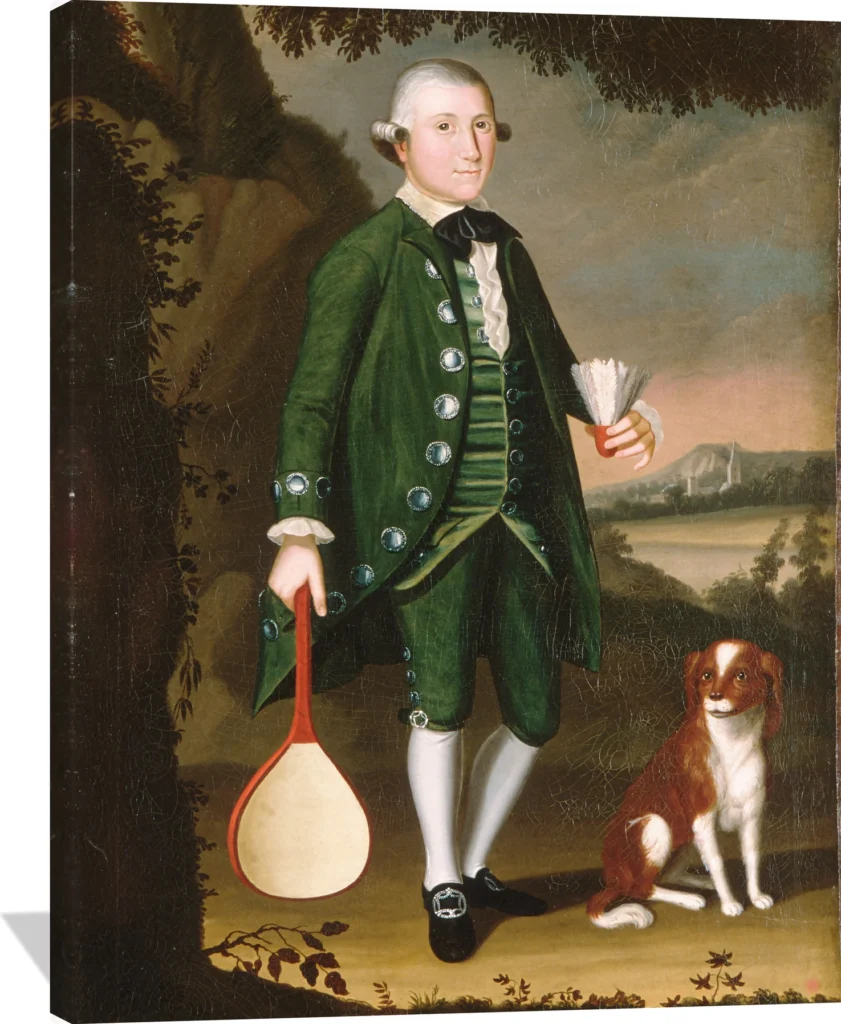
The William Williams Portrait of a Boy, Probably of the Crossfield Family canvas captures refined 18th-century elegance with a touch of youthful charm. The boy’s vivid green attire, paired with creamy whites and warm earth tones, stands out against a serene landscape of muted browns and soft sky blues. Every detail, from the poised stance to the loyal dog at his side, reflects Williams’s mastery of balance and composure.
This timeless wall art brings a sense of heritage and sophistication to any interior. Ideal for a study, library, or classic living room, this canvas print adds depth, color, and a distinguished historical presence to your collection.
William Williams (1727–1791) was an influential early American painter whose work helped shape the visual language of the emerging nation. Active primarily in Philadelphia, he is often recognized for introducing a more sophisticated, European-informed approach to portraiture and narrative painting in the colonies.
Artistic Style and Approach
Williams blended English Rococo sensibilities with an emerging American artistic identity. His paintings display careful attention to detail, balanced compositions, and a refined yet approachable realism. He frequently incorporated symbolic elements, enriching his works with subtle storytelling qualities. His ability to merge European technique with the distinct personality of colonial America helped establish a foundation for later generations of American artists.
Subjects and Notable Work
Best known for portraiture, Williams captured merchants, landowners, and other figures central to colonial society. His portraits not only record likenesses but also convey character and social stature through expressive poses and thoughtful attributes. One of his most recognized works, Deborah Hall, exemplifies his skill in portraying youthful elegance and genteel refinement. He also explored allegorical and literary themes, an unusual pursuit in the American colonies at the time, demonstrating his wide-ranging artistic ambition.
Legacy and Significance
As one of the early professional artists in America, Williams played a meaningful role in nurturing the nation’s artistic culture. He is credited with influencing younger artists, including the future master Benjamin West, contributing to the rise of an American painting tradition with strong European ties. His work remains valued for its historical insight and its pioneering blend of styles that helped define art in the colonial period.
Trust & policies
- 🚚 Free tracked shipping to 45+ countries. Local import duties or taxes may apply in some destinations.
- 🎨 Made-to-order, printed close to your delivery location
- 🛡️ If damaged, defective, or misprinted: free replacement or refund
- 🌍 Printed in US/CA/EU/UK/AU based on delivery location
- 💎 Acid-free, fade-resistant canvas with solid wood stretcher bars
- 🖼️ Optional pine floating frames in white, black, or brown
- 🪝 Ready to hang — hardware pre-installed