Artistic Style
Menzel is renowned for a meticulous, truth‑seeking approach that blends realism with a keen psychological sensitivity. His drawings and paintings display remarkable technical precision, vivid atmosphere, and a capacity to capture fleeting gestures and textures with striking immediacy.
Subjects and Themes
He explored both intimate interiors and grand historical scenes, moving fluidly between the private and the monumental. Menzel’s portrayals of Prussian life especially his depictions of Frederick the Great became defining works of his career. Equally compelling are his studies of modern urban life and industrial labor, where he recorded factories, workshops, and city streets with an unsentimental yet empathetic eye.
Notable Contributions
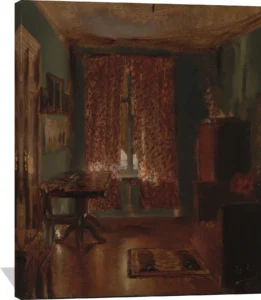
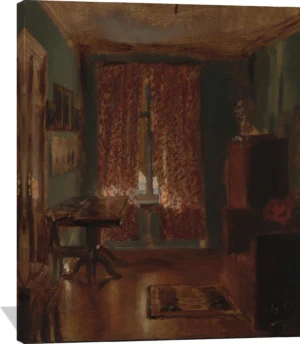
Menzel played a central role in shaping German realism. His ability to render detail without sacrificing emotional depth made him a singular voice among his contemporaries. Works such as The Iron Rolling Mill and The Balcony Room exemplify his command of light and space, as well as his interest in the emerging modern world.
Cultural Significance
Over his long career in Berlin, Menzel became a crucial visual chronicler of a nation in transformation. His images provide an invaluable record of Prussian society, from its royal court to its rapidly expanding industrial workforce. Today, he is regarded as a master of nineteenth‑century art whose sharp observational style and uncompromising realism continue to resonate with contemporary audiences.