Artistic Style
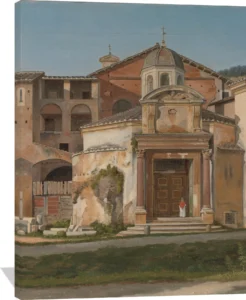
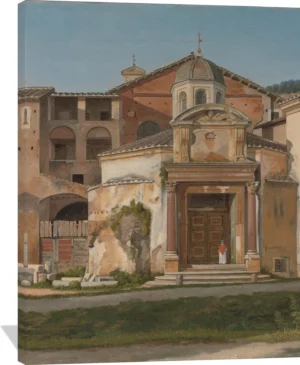
Eckersberg’s style is defined by its luminous precision, balanced compositions, and meticulous attention to perspective. His training under Jacques-Louis David in Paris instilled a neoclassical foundation, yet he blended this with a distinctly Danish sensibility marked by serenity, natural light, and a quiet intimacy. His works often exhibit a remarkable equilibrium between scientific accuracy and poetic restraint.
Subjects and Themes
Eckersberg is celebrated for portraits, landscapes, architectural scenes, and marine paintings. He portrayed his subjects with direct, unembellished clarity, whether capturing the crisp geometry of Copenhagen’s streets, the soft radiance of Mediterranean vistas, or the poised composure of his sitters. His paintings frequently explore the interplay of observation and structure, offering compositions that feel both exacting and accessible.
Notable Contributions
As a professor at the Royal Danish Academy of Fine Arts, Eckersberg transformed artistic education by emphasizing drawing from life, rigorous study of perspective, and close attention to nature. This pedagogical shift profoundly influenced a generation of artists who continued to define Danish visual culture throughout the 19th century. His legacy endures not only through his own works but also through the enduring principles he instilled in his students.
Cultural Significance
Eckersberg’s paintings embody the clarity and refinement that came to characterize Danish Golden Age art. His approach introduced a new level of technical discipline and naturalism, helping establish Denmark’s artistic identity in the broader European context. Today, his work remains highly valued for its serenity, precision, and its role in shaping the foundations of modern Danish painting.