
Saint Dominic in Penitence
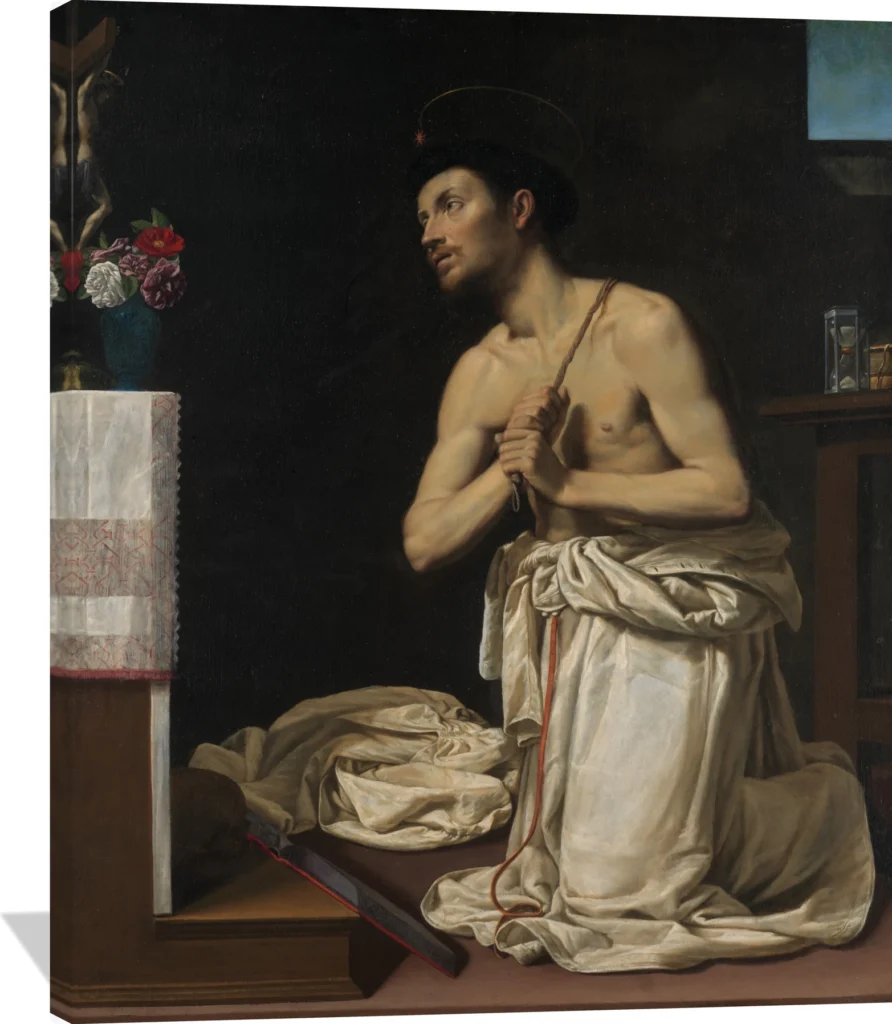
Filippo Tarchiani’s Saint Dominic in Penitence canvas captures a moment of profound spiritual devotion through dramatic chiaroscuro and masterful realism. The saint kneels in quiet reflection, bathed in warm, golden light against deep shadows of brown, ivory, and muted red. Every fold of fabric and flicker of light evokes humility and faith, hallmarks of Tarchiani’s refined Baroque style.
This museum-quality wall art brings timeless serenity to any setting—whether displayed in a contemplative study, elegant living room, or refined entryway. A Filippo Tarchiani canvas print like this transforms sacred emotion into enduring beauty, inviting calm introspection into your home décor.
Filippo Tarchiani (1576–1645) was an Italian painter whose career unfolded between Castello and Florence, where he became closely associated with the refined artistic language of the late Florentine Baroque. His work reflects a graceful synthesis of Tuscan tradition and the dynamic influences he absorbed during his formative years, including exposure to Roman classicism and the evolving aesthetics of the early Seicento.
Artistic Style
Tarchiani is known for an elegant, measured style that blends harmonious compositions with a gentle yet expressive naturalism. His palette tends toward warm, balanced tones, creating an atmosphere of clarity and restraint. Figures in his paintings are rendered with careful modeling and a poised serenity characteristic of Florence’s academic culture. His ability to merge refined draftsmanship with subtle emotional depth marks him as a distinctive voice within the Florentine milieu.
Subjects and Themes
Religious narratives dominated Tarchiani’s output, reflecting the devotional needs of Counter-Reformation Florence. He often depicted saints, biblical events, and contemplative moments imbued with a reflective calm. His altarpieces and larger commissions demonstrate disciplined composition and an affinity for storytelling through gesture and light. Tarchiani also produced portraits, capturing the dignified reserve of Florentine patrons with notable sensitivity.
Contributions and Significance
Tarchiani played a meaningful role in sustaining and evolving the traditions of the Florentine school during a period of artistic transition. Working within prominent circles, he contributed to the city’s major religious institutions and helped shape the visual identity of early seventeenth‑century Florence. His participation in the broader movement toward clarity, order, and expressive restraint positioned him as a respected interpreter of Baroque classicism.
Legacy
Although not as widely known today as some of his contemporaries, Tarchiani’s work endures for its refined balance of structure and emotion. His paintings embody a thoughtful, cultivated approach to sacred and human themes, offering a window into the artistic values of Florence during a transformative era. Collectors and admirers appreciate his ability to convey spirituality with both discipline and warmth, a hallmark of his distinctively Florentine sensibility.
Trust & policies
- 🚚 Free tracked shipping to 45+ countries. Local import duties or taxes may apply in some destinations.
- 🎨 Made-to-order, printed close to your delivery location
- 🛡️ If damaged, defective, or misprinted: free replacement or refund
- 🌍 Printed in US/CA/EU/UK/AU based on delivery location
- 💎 Acid-free, fade-resistant canvas with solid wood stretcher bars
- 🖼️ Optional pine floating frames in white, black, or brown
- 🪝 Ready to hang — hardware pre-installed