
The Virgin Adored by Saints
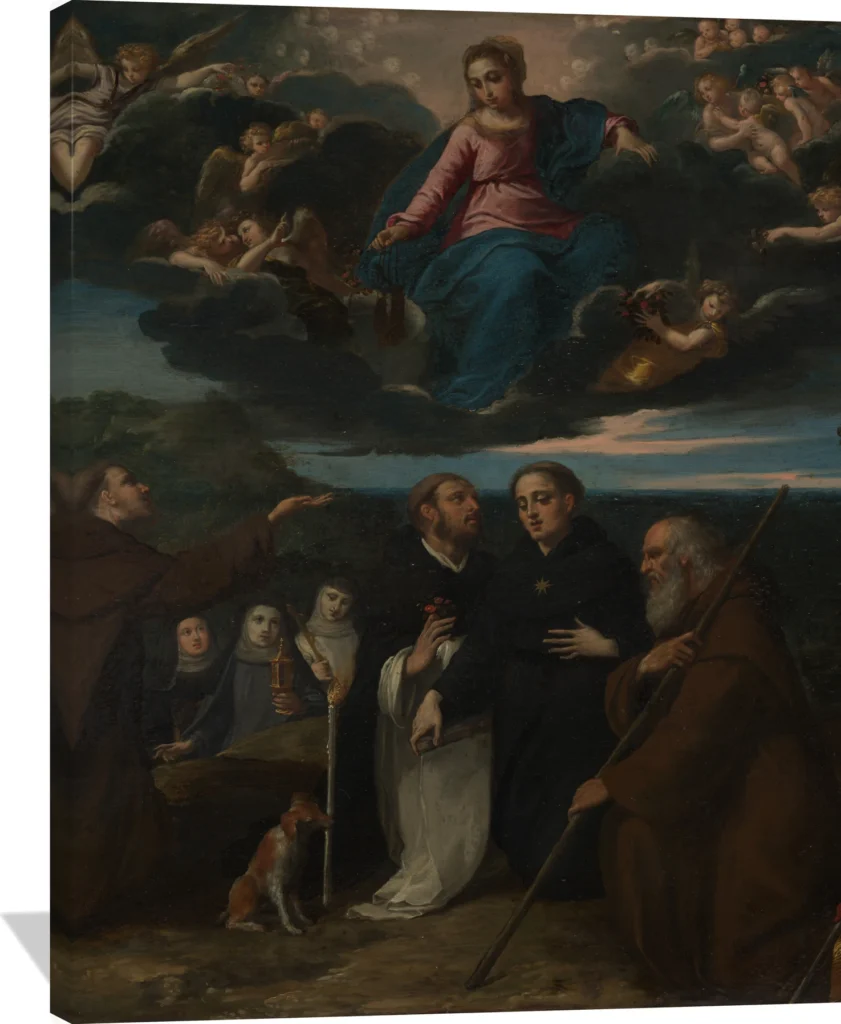
The Scarsellino The Virgin Adored by Saints canvas captures a luminous vision of devotion and serenity. Bathed in deep blues, warm browns, and soft golden light, the Virgin Mary is elevated among clouds and angels while saints below gaze upward in reverence. Scarsellino’s masterful balance of divine radiance and human humility brings a timeless spiritual depth to this Renaissance masterpiece.
This exquisite canvas print infuses any living room, study, or entryway with quiet grandeur and contemplative beauty. A tribute to Italian artistry, it evokes both reverence and refinement—perfect for collectors seeking meaningful, museum-inspired wall art.
Scarsellino (Ippolito Scarsella), an Italian painter from Ferrara active around 1550–1620, is celebrated for his lyrical interpretations of late Renaissance and early Baroque aesthetics. His work stands at the crossroads of Ferrarese tradition and the emerging dynamism that characterized the seventeenth century.
Artistic Style
Known for his fluid brushwork and radiant color harmonies, Scarsellino developed a distinctive visual language marked by graceful movement and poetic atmosphere. His compositions often blend Venetian-inspired luminosity with the refined elegance of the Ferrarese school. This synthesis gives his paintings a uniquely expressive character, often described as vividly atmospheric.
Subjects and Themes
Scarsellino frequently depicted religious narratives, mythological scenes, and idyllic pastoral settings. His interpretations of subjects such as the Holy Family, the Virgin and Child, and episodes from classical lore are notable for their gentle emotional resonance and striking chromatic richness. Works like The Baptism of Christ and Judith with the Head of Holofernes demonstrate his ability to fuse spiritual intensity with serene, balanced composition.
Historical Significance
Operating during a transformative moment in Italian art, Scarsellino played a key role in shaping the visual culture of Ferrara as it transitioned from Renaissance formality toward Baroque expressiveness. His influence extended to local workshops and younger artists who adopted aspects of his painterly softness and narrative clarity. His legacy reflects a master who bridged eras, offering works that remain admired for their lyrical beauty and enduring emotional depth.
Trust & policies
- 🚚 Free tracked shipping to 45+ countries. Local import duties or taxes may apply in some destinations.
- 🎨 Made-to-order, printed close to your delivery location
- 🛡️ If damaged, defective, or misprinted: free replacement or refund
- 🌍 Printed in US/CA/EU/UK/AU based on delivery location
- 💎 Acid-free, fade-resistant canvas with solid wood stretcher bars
- 🖼️ Optional pine floating frames in white, black, or brown
- 🪝 Ready to hang — hardware pre-installed