
Madame Bergeret de Frouville as Diana
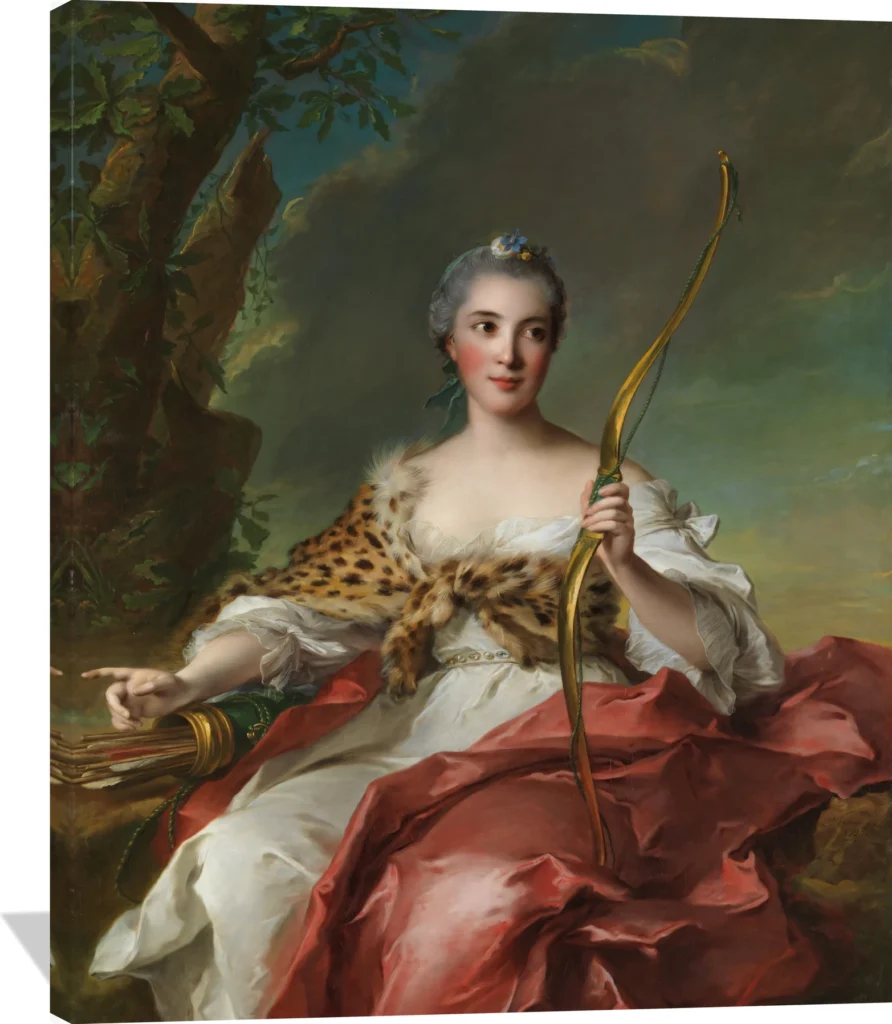
The Jean Marc Nattier Madame Bergeret de Frouville as Diana canvas captures the grace and poise of 18th-century French portraiture. Draped in luminous whites and deep crimson fabrics, the sitter embodies the goddess Diana with a golden bow in hand, set against a serene, verdant landscape. The soft interplay of light and texture evokes refinement and timeless allure.
This exquisite wall art brings a touch of classical elegance to any interior. Perfect for a living room, study, or entryway, this canvas print celebrates Nattier’s mastery of color and form, offering a sophisticated focal point that bridges myth and portraiture with effortless beauty.
Jean Marc Nattier (1685–1766) was a distinguished French painter of the Parisian Rococo era, celebrated for his refined portraiture and elegant allegorical compositions. Trained within a family of artists and deeply connected to the cultural life of the French court, Nattier became one of the most sought-after portraitists of his time.
Artistic Style
Nattier’s work is characterized by luminous color, polished surfaces, and a graceful synthesis of realism and idealization. His portraits often incorporate mythological or allegorical elements, presenting sitters in imaginative guises that enhance their poise and prestige. This stylistic approach contributed to a distinctive visual language that balanced courtly sophistication with gentle intimacy.
Subjects and Themes
Best known for his portraits of aristocratic women, Nattier frequently portrayed members of the French nobility, including many figures linked to the royal family. He depicted his subjects with an emphasis on serenity, refinement, and elegance, often integrating symbolic attributes or luxurious drapery to elevate their presence. His ability to merge likeness with poetic embellishment became a hallmark of his celebrated oeuvre.
Legacy and Significance
Nattier’s paintings offer an enduring window into the aesthetics and cultural values of eighteenth‑century France. His work stands out for its harmonious blend of naturalistic detail and Rococo charm, and his mastery in transforming portraiture into a form of visual storytelling secured his reputation as a leading figure of the period. Today, his art remains admired for its technical finesse, timeless beauty, and its subtle yet powerful reflection of French aristocratic identity.
Trust & policies
- 🚚 Free tracked shipping to 45+ countries. Local import duties or taxes may apply in some destinations.
- 🎨 Made-to-order, printed close to your delivery location
- 🛡️ If damaged, defective, or misprinted: free replacement or refund
- 🌍 Printed in US/CA/EU/UK/AU based on delivery location
- 💎 Acid-free, fade-resistant canvas with solid wood stretcher bars
- 🖼️ Optional pine floating frames in white, black, or brown
- 🪝 Ready to hang — hardware pre-installed