Artistic Style
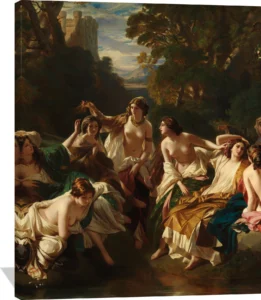
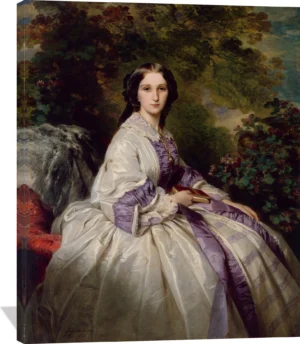
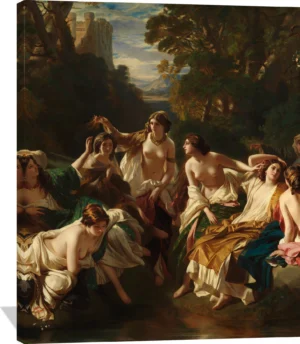
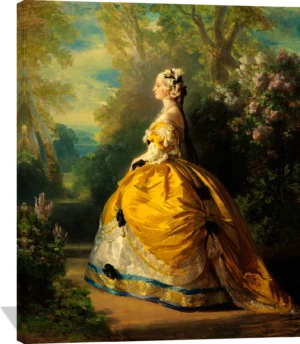
Winterhalter’s style is distinguished by luminous surfaces, soft modeling, and a polished realism that conveyed both ideal beauty and individual character. His portraits often feature flowing drapery, delicate textures, and a refined sense of composition, creating an atmosphere of cultivated sophistication. The subtle interplay of light and sumptuous detail became his signature, shaping the visual language of aristocratic portraiture in his era.
Subjects and Themes
Best known for portraying queens, empresses, and nobles, Winterhalter created iconic images of figures such as Empress Eugénie, Queen Victoria, and Prince Albert. His subjects are frequently shown in elegant attire that highlights status and personality, while the artist’s masterful rendering of fabric and form elevated these works beyond documentation to expressions of social identity. Though primarily a court portraitist, he occasionally produced genre scenes and family portraits imbued with the same grace and intimacy.
Cultural Significance
Winterhalter’s portraits became defining images of European royalty, shaping how the public perceived power, beauty, and refinement in the 19th century. His work remains valued for its timeless elegance and its role in documenting a transformative period in European cultural life. Today, Winterhalter’s paintings are admired for their technical mastery and for the unique window they offer into the world of imperial courts and aristocratic tradition.