Artistic Style
Lancret’s work is characterized by luminous color, fluid brushwork, and a graceful sense of movement. His paintings often evoke an atmosphere of refined pleasure, capturing the charm and spontaneity associated with Rococo aesthetics. He mastered subtle plays of light and shadow, giving his figures a lively immediacy that became a hallmark of his style.
Subjects and Themes
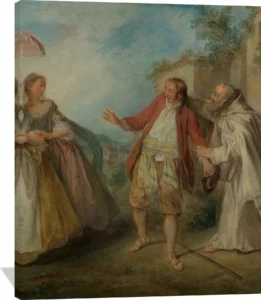
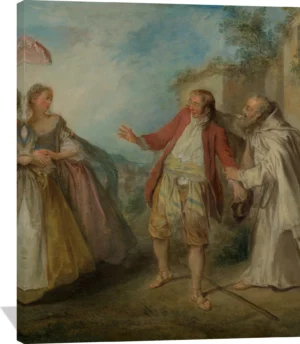
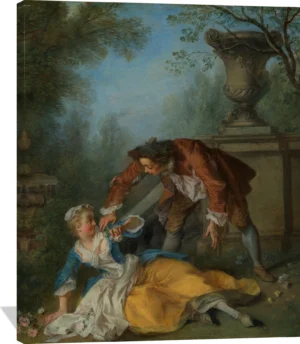
Best known for his fêtes galantes, Lancret depicted fashionable society engaged in music, dance, garden promenades, and theatrical amusements. These scenes, inspired in part by the work of Antoine Watteau, reveal his sensitivity to human gesture and his talent for crafting narrative moments that feel both intimate and theatrical. He also produced genre scenes of everyday life, winter landscapes, and graceful portrayals of performers from the Parisian stage.
Cultural and Historical Significance
Lancret rose to prominence within the Académie Royale, contributing to the development of a distinctly French painting tradition that celebrated elegance, sociability, and the artistry of leisure. His work resonated with patrons seeking imagery that reflected the sophistication and vitality of contemporary Parisian culture.
Legacy
Nicolas Lancret’s paintings remain admired for their charm, clarity, and refined craftsmanship. His ability to blend narrative detail with decorative finesse continues to make his œuvre a vibrant representation of Rococo artistry, securing his place as one of the period’s most charming and enduring painters.