Artistic Style
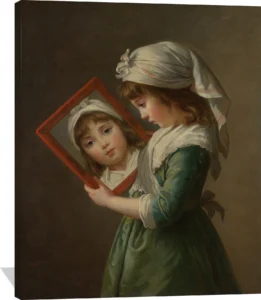
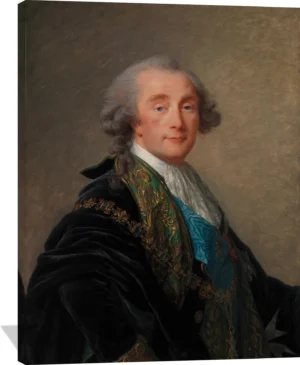
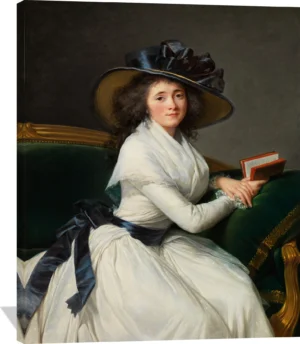
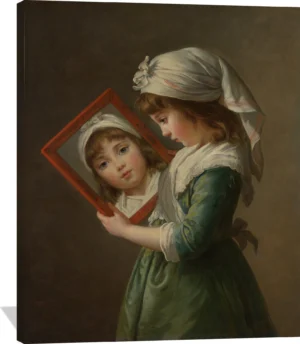
Vigée Le Brun’s work is distinguished by its elegant neoclassical sensibility blended with the softness and charm of late Rococo. Her portraits are characterized by naturalistic color, graceful poses, and a warm human presence that brings her sitters vividly to life. She excelled at capturing texture, light, and the expressive nuances of the face, creating images that feel both polished and intimate. Her use of gentle highlights and rich tonal transitions became a hallmark of her distinctive visual language.
Notable Contributions
As one of the few women admitted to the Académie Royale de Peinture et de Sculpture, Vigée Le Brun achieved remarkable professional recognition in a male‑dominated field. She produced an extensive body of work across France, Italy, Austria, Russia, and Germany during her years of exile after the French Revolution, painting royalty, nobility, and prominent cultural figures. Her portraits of Marie Antoinette, including the celebrated Marie Antoinette with a Rose, remain defining images of the pre‑Revolutionary French court.
Subjects and Significance
Vigée Le Brun specialized in expressive portraiture, often portraying her subjects with warmth, dignity, and an air of refined ease. She frequently depicted women and children, emphasizing elegance, sensitivity, and individuality. Her work offers a vivid window into the style, fashion, and social ideals of late eighteenth‑century Europe. As a pioneering female artist with a prolific international career, she holds enduring cultural significance and continues to be recognized for her masterful portraiture and influential artistic legacy.