
The Rabbit Hunters
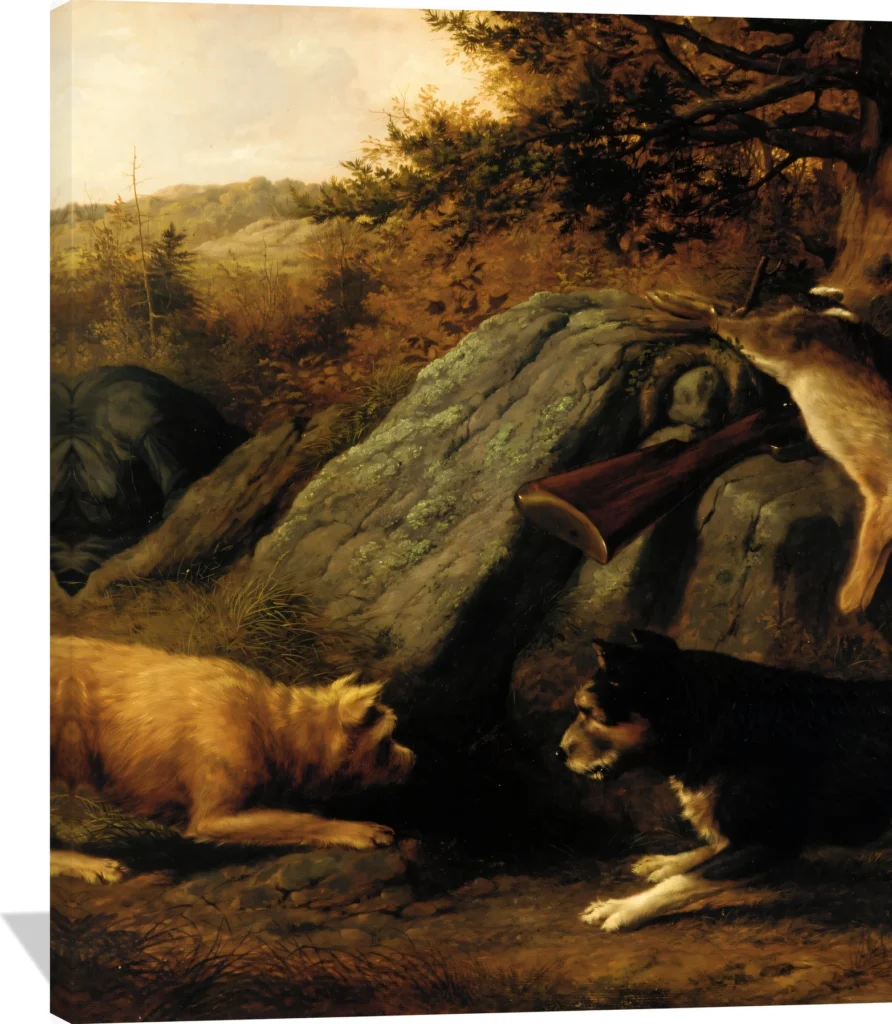
The Thomas Hewes Hinckley The Rabbit Hunters canvas captures a timeless rural scene filled with quiet tension and natural beauty. In warm earth tones of amber, moss green, and soft brown, the artist depicts a hunter and his dogs in the midst of pursuit, set against a serene autumn landscape. The composition’s realism and depth evoke the spirit of 19th-century sporting art with remarkable detail and atmosphere.
This elegant The Rabbit Hunters wall art brings a touch of classic heritage to any space. Ideal for a study, library, or rustic living room, it adds both sophistication and storytelling to your decor through Hinckley’s masterful brushwork and evocative mood.
Thomas Hewes Hinckley (1813–1896) was a prominent American painter celebrated for his richly detailed representations of animals and pastoral life. Active during the mid‑19th century, he became especially admired for his depictions of cattle, game animals, and rural New England landscapes, capturing the character of agrarian America with striking realism.
Artistic Style
Hinckley’s work is distinguished by meticulous draftsmanship, warm natural light, and an attentive observation of animal anatomy and behavior. His compositions often blend quiet outdoor settings with carefully modeled figures, creating scenes that feel both serene and grounded in direct study. This balance of accuracy and atmosphere contributed to his reputation as a leading American animal painter of his era.
Notable Contributions
Although he worked in an age dominated by landscape painters, Hinckley carved a unique artistic identity through his focused subject matter. Paintings such as Two Cows in a Meadow or Deer in the Woods illustrate his ability to elevate everyday rural subjects into works of enduring appeal. His dedication to faithful representation helped shape the visual vocabulary of American sporting and pastoral art.
Cultural Significance
Hinckley’s paintings offer more than visual pleasure; they document a transforming American countryside. His scenes reflect a nation balancing tradition and progress, and they provide valuable insight into 19th‑century rural life. Collectors and historians continue to value his work for its clarity, charm, and its role in preserving the imagery of an earlier American landscape.
Today, Hinckley’s legacy endures through his refined technique and his ability to portray animals with both precision and quiet emotional depth, making him a defining figure in American animal painting and a key interpreter of pastoral realism.
Trust & policies
- 🚚 Free tracked shipping to 45+ countries. Local import duties or taxes may apply in some destinations.
- 🎨 Made-to-order, printed close to your delivery location
- 🛡️ If damaged, defective, or misprinted: free replacement or refund
- 🌍 Printed in US/CA/EU/UK/AU based on delivery location
- 💎 Acid-free, fade-resistant canvas with solid wood stretcher bars
- 🖼️ Optional pine floating frames in white, black, or brown
- 🪝 Ready to hang — hardware pre-installed