
Alfonso d’Este (1486–1534), Duke of Ferrara
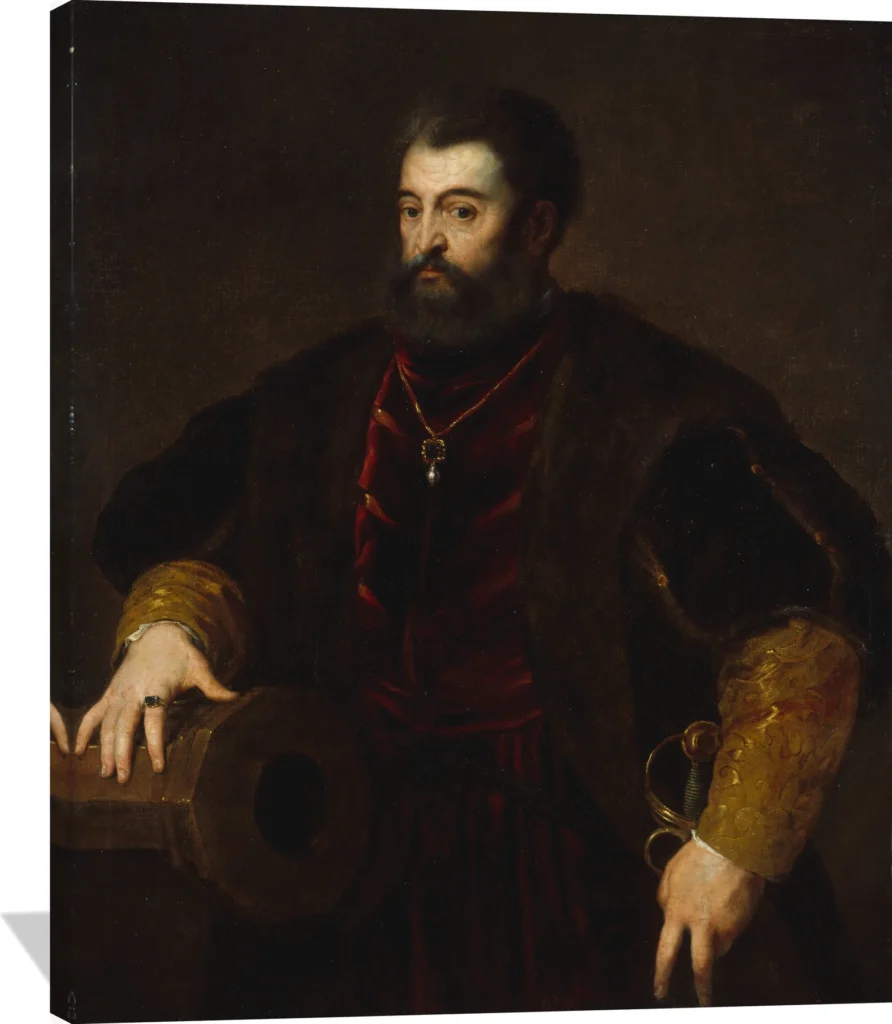
The Titian Alfonso d’Este (1486–1534), Duke of Ferrara canvas captures the commanding presence of Renaissance nobility through deep, velvety tones of burgundy, gold, and shadowed brown. Titian’s masterful brushwork and subtle light reveal both the dignity and introspection of his subject, creating a timeless portrait of power and refinement.
This premium canvas print brings classical sophistication to any interior. Ideal for a study, library, or elegant living space, it adds a distinguished focal point that reflects strength and heritage. Elevate your wall art collection with this evocative work from one of history’s greatest masters.
Titian (Italian, Pieve di Cadore ca. 1485/90–1576 Venice) stands as one of the most influential painters of the High Renaissance, celebrated for his mastery of color and the expressive power of his brushwork. Active for more than six decades, he shaped the visual language of the Venetian Renaissance and set new standards for artistic invention across Europe.
Artistic Style
Titian is renowned for his luminous palette, dynamic compositions, and pioneering use of layered glazes. His work evolved from precise early contours to a more fluid, atmospheric technique that gave his late paintings an extraordinary sense of movement and emotional depth. This bold approach to color and texture inspired generations of artists, from Rubens to Velázquez.
Subjects and Themes
His oeuvre spans portraits, devotional works, and mythological scenes, each marked by psychological nuance and dramatic presence. Whether capturing the commanding likeness of a statesman or the sensual narrative of Venus and Adonis, Titian infused his subjects with humanity and grandeur. His portraits, in particular, helped define the genre as a vehicle for character and status.
Cultural Significance
Titian served as a central figure in Venetian artistic circles, working for prominent patrons including European courts and the Catholic Church. His innovations in color, composition, and expressive form solidified his legacy as a transformative force in Western art, ensuring his works remain among the most admired and influential of the Renaissance.
Trust & policies
- 🚚 Free tracked shipping to 45+ countries. Local import duties or taxes may apply in some destinations.
- 🎨 Made-to-order, printed close to your delivery location
- 🛡️ If damaged, defective, or misprinted: free replacement or refund
- 🌍 Printed in US/CA/EU/UK/AU based on delivery location
- 💎 Acid-free, fade-resistant canvas with solid wood stretcher bars
- 🖼️ Optional pine floating frames in white, black, or brown
- 🪝 Ready to hang — hardware pre-installed