
María Teresa (1638–1683), Infanta of Spain
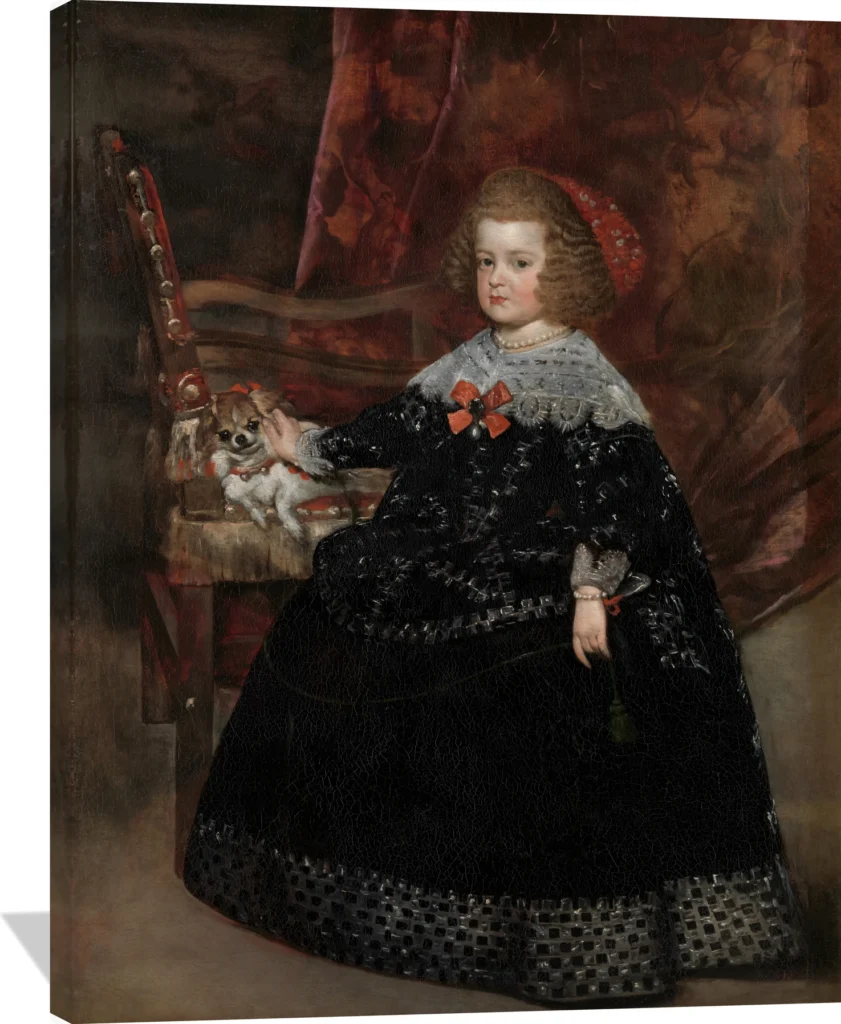
The Juan Bautista Martínez del Mazo María Teresa (1638–1683), Infanta of Spain canvas captures the quiet dignity and refined grace of Spanish royal portraiture. Rendered in deep blacks, silvers, and warm browns, the young Infanta is depicted with exquisite detail, her poise complemented by the soft textures of lace and velvet. The painter’s mastery of light and shadow brings a timeless depth to this Baroque masterpiece.
This elegant wall art adds a touch of regal sophistication to any setting—perfect for a living room, study, or entryway. A premium canvas print that celebrates classical artistry and the enduring beauty of 17th-century Spain.
Juan Bautista Martínez del Mazo (Cuenca ca. 1612–1667 Madrid) was one of 17th‑century Spain’s most accomplished painters, celebrated for his refined technique and close association with Diego Velázquez. As Velázquez’s son‑in‑law and studio collaborator, Mazo absorbed the mature naturalism of the Spanish court while developing a voice marked by clarity, precision, and a quietly poetic sensibility.
Artistic Style
Mazo’s work is distinguished by its luminous realism, elegant restraint, and masterful handling of space. His paintings often reveal a deep attentiveness to atmosphere and architectural detail, rendered with a calm exactitude that reflects the influence of both Spanish and Italian Baroque traditions. His command of perspective and his subtle, silvery palette give his compositions a distinctive harmony that continues to captivate viewers.
Subjects and Notable Contributions
Mazo excelled in portraits, historical scenes, and especially expansive landscapes genres in which he demonstrated exceptional observational skill. He is particularly known for producing sophisticated copies and reinterpretations of Velázquez’s court portraits, a task entrusted to him due to his remarkable fidelity to the master’s style. Works such as View of Zaragoza and View of the Sierra de Guadarrama highlight his ability to blend topographical accuracy with a serene, noble atmosphere.
Cultural Significance
As a court painter to King Philip IV, Mazo played a vital role in shaping the visual identity of the Spanish monarchy during the later Baroque era. His paintings offer invaluable insight into the aesthetics of the Habsburg court and the evolving artistic culture of 17th‑century Spain. Today, he is recognized as a key figure who helped preserve and extend the artistic legacy of Velázquez while establishing his own place within the Golden Age of Spanish painting.
Trust & policies
- 🚚 Free tracked shipping to 45+ countries. Local import duties or taxes may apply in some destinations.
- 🎨 Made-to-order, printed close to your delivery location
- 🛡️ If damaged, defective, or misprinted: free replacement or refund
- 🌍 Printed in US/CA/EU/UK/AU based on delivery location
- 💎 Acid-free, fade-resistant canvas with solid wood stretcher bars
- 🖼️ Optional pine floating frames in white, black, or brown
- 🪝 Ready to hang — hardware pre-installed