
A Female Martyr Saint
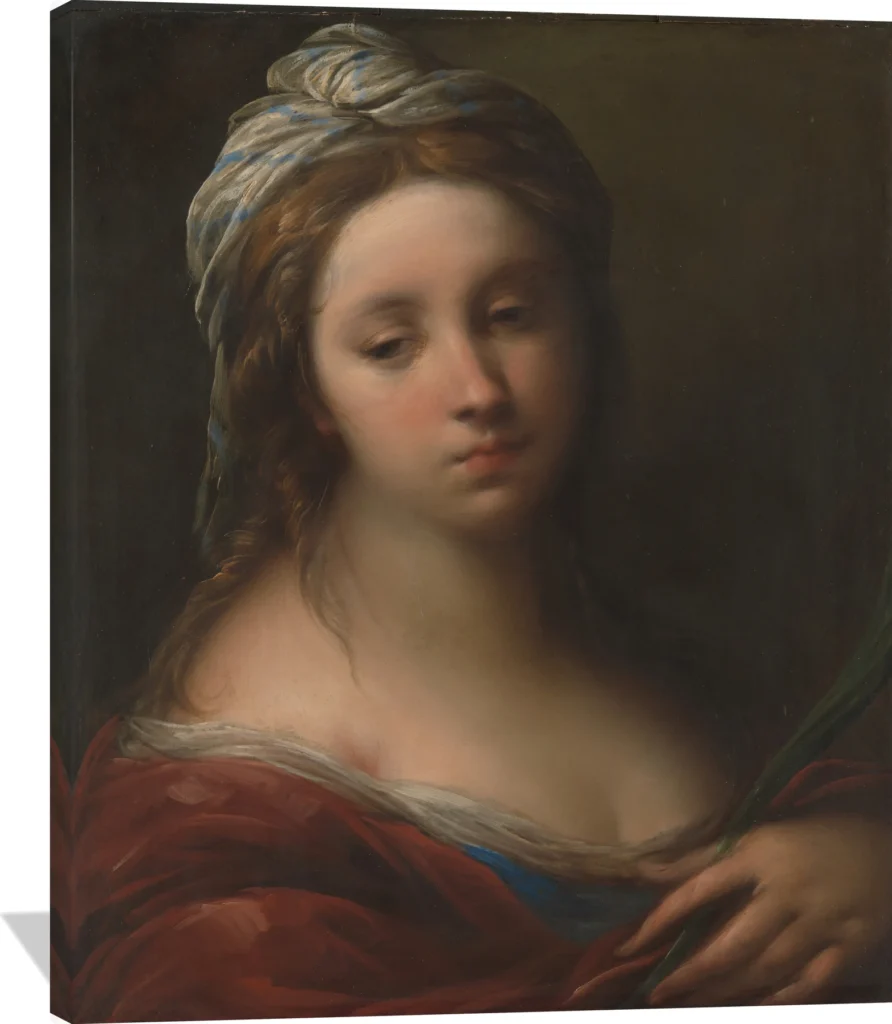
The Carlo Francesco Nuvolone A Female Martyr Saint canvas captures the serene grace and quiet strength of its subject through soft light and delicate brushwork. Warm tones of crimson, ivory, and muted gold contrast beautifully with the saint’s calm expression, creating a timeless aura of devotion and dignity. The artist’s refined Baroque style lends the portrait a luminous depth that draws the viewer inward.
This elegant canvas print brings classical sophistication to any space. Ideal for a living room, study, or entryway, it adds a sense of contemplation and artistry to modern interiors while honoring the enduring beauty of Italian painting.
Carlo Francesco Nuvolone (1609–1662) was a distinguished Milanese painter whose work exemplifies the refined elegance of Lombard Baroque painting. Trained within a prominent artistic family, he absorbed the traditions of his father, Panfilo Nuvolone, while developing a softer, more lyrical visual language that set his work apart in seventeenth‑century northern Italy.
Artistic Style
Nuvolone is celebrated for his delicate handling of light, graceful figuration, and a gentle, atmospheric approach that brought emotional resonance to both sacred and secular themes. His palette often features tender tonal transitions, giving his compositions a luminous, almost velvety quality. These characteristics place him among the most poetic interpreters of Lombard Baroque aesthetics, distinguished by a harmonious balance between naturalism and subtle idealization.
Notable Subjects and Themes
Religious imagery dominates Nuvolone’s oeuvre, including intimate depictions of the Madonna and Child, saints, and devotional narratives rendered with serene spirituality. He also produced refined portraits and mythological scenes, infusing each subject with a quiet sensitivity. Whether portraying divine figures or aristocratic patrons, he conveyed an emotional immediacy rooted in nuanced expression and controlled yet radiant color.
Legacy and Significance
As a leading figure in the Milanese Baroque, Nuvolone contributed to shaping a regional style that emphasized grace, softness, and pictorial harmony. His influence extended through his family workshop and the broader artistic circles of Lombardy. Today, he is recognized for his ability to transform traditional religious and figurative themes into works of enduring lyricism and refined emotional depth, qualities that continue to captivate collectors and admirers of Italian Baroque art.
Trust & policies
- 🚚 Free tracked shipping to 45+ countries. Local import duties or taxes may apply in some destinations.
- 🎨 Made-to-order, printed close to your delivery location
- 🛡️ If damaged, defective, or misprinted: free replacement or refund
- 🌍 Printed in US/CA/EU/UK/AU based on delivery location
- 💎 Acid-free, fade-resistant canvas with solid wood stretcher bars
- 🖼️ Optional pine floating frames in white, black, or brown
- 🪝 Ready to hang — hardware pre-installed