
Head of a Bishop
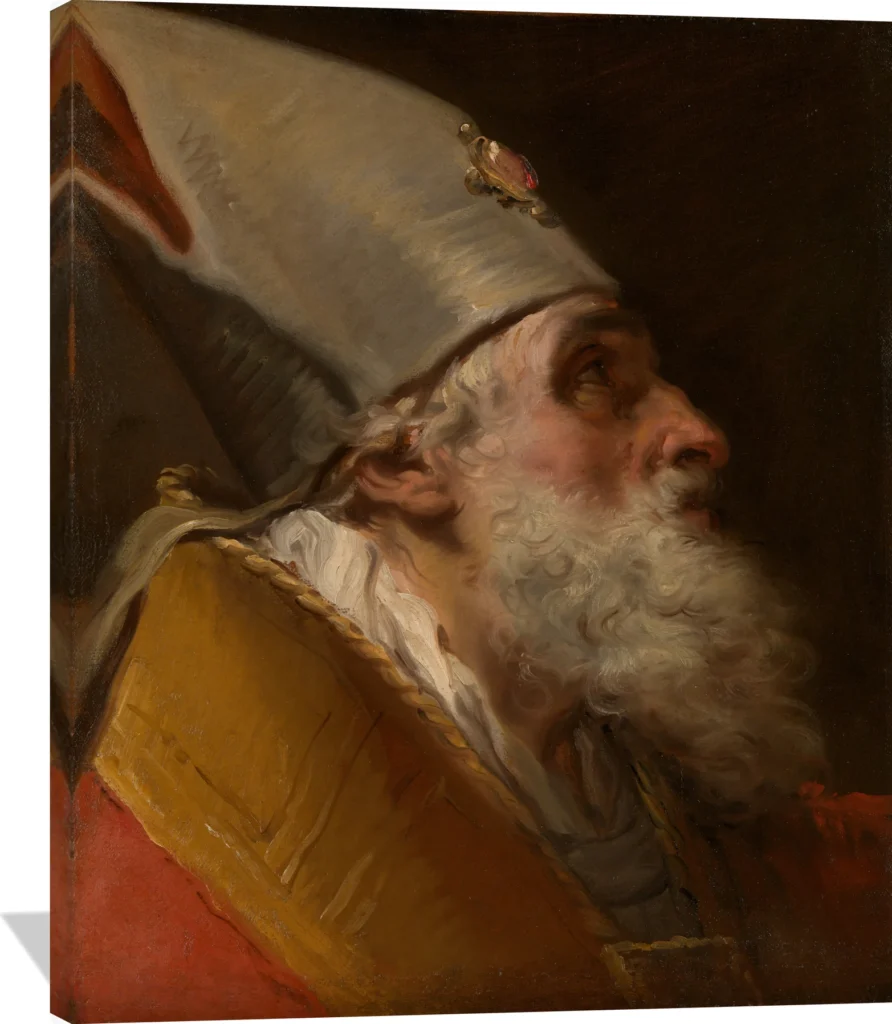
The Gaetano Gandolfi Head of a Bishop canvas captures a moment of quiet reverence and introspection, rendered with the artist’s signature mastery of light and texture. Warm ochres, deep browns, and soft ivory tones illuminate the bishop’s upward gaze, evoking both spiritual devotion and human emotion in a timeless composition.
This elegant wall art brings a sense of dignity and history to any interior, from a refined study to a serene living space. A premium Head of a Bishop canvas print offers collectors and admirers of Italian art a striking focal point imbued with the grace and depth of the 18th-century Baroque tradition.
Gaetano Gandolfi (San Matteo della Decima, 1734–1802 Bologna) was a leading figure of late Baroque and early Neoclassical painting in northern Italy. Trained at the Accademia Clementina in Bologna, he became known for his virtuosic draftsmanship, luminous palette, and dynamic handling of form.
Artistic Style and Approach
Gandolfi’s work blends the expressive brilliance of the Bolognese Baroque with emerging eighteenth‑century classicism. His compositions often reveal spirited movement, graceful figuration, and a refined sensitivity to light. These qualities, paired with his command of anatomy and gesture, make him a distinctive voice in the transition between stylistic eras.
Subjects and Themes
He painted a wide range of themes, from religious and mythological narratives to elegant portraiture. His altarpieces display a vivid theatricality, while his secular commissions often explore human emotion with clarity and sophistication. Studies of heads and characterful figures highlight his ability to capture personality with immediacy and charm.
Legacy and Cultural Significance
As one of the most celebrated members of the Gandolfi artistic dynasty, he played a central role in sustaining Bologna’s artistic reputation during the eighteenth century. His influence extended through his teaching and the widespread admiration of his vigorous, expressive style. Today, Gandolfi is remembered for his masterful draftsmanship and his eloquent synthesis of Baroque vitality and classical restraint.
Trust & policies
- 🚚 Free tracked shipping to 45+ countries. Local import duties or taxes may apply in some destinations.
- 🎨 Made-to-order, printed close to your delivery location
- 🛡️ If damaged, defective, or misprinted: free replacement or refund
- 🌍 Printed in US/CA/EU/UK/AU based on delivery location
- 💎 Acid-free, fade-resistant canvas with solid wood stretcher bars
- 🖼️ Optional pine floating frames in white, black, or brown
- 🪝 Ready to hang — hardware pre-installed