
Maharana Jagat Singh Hawks for Cranes
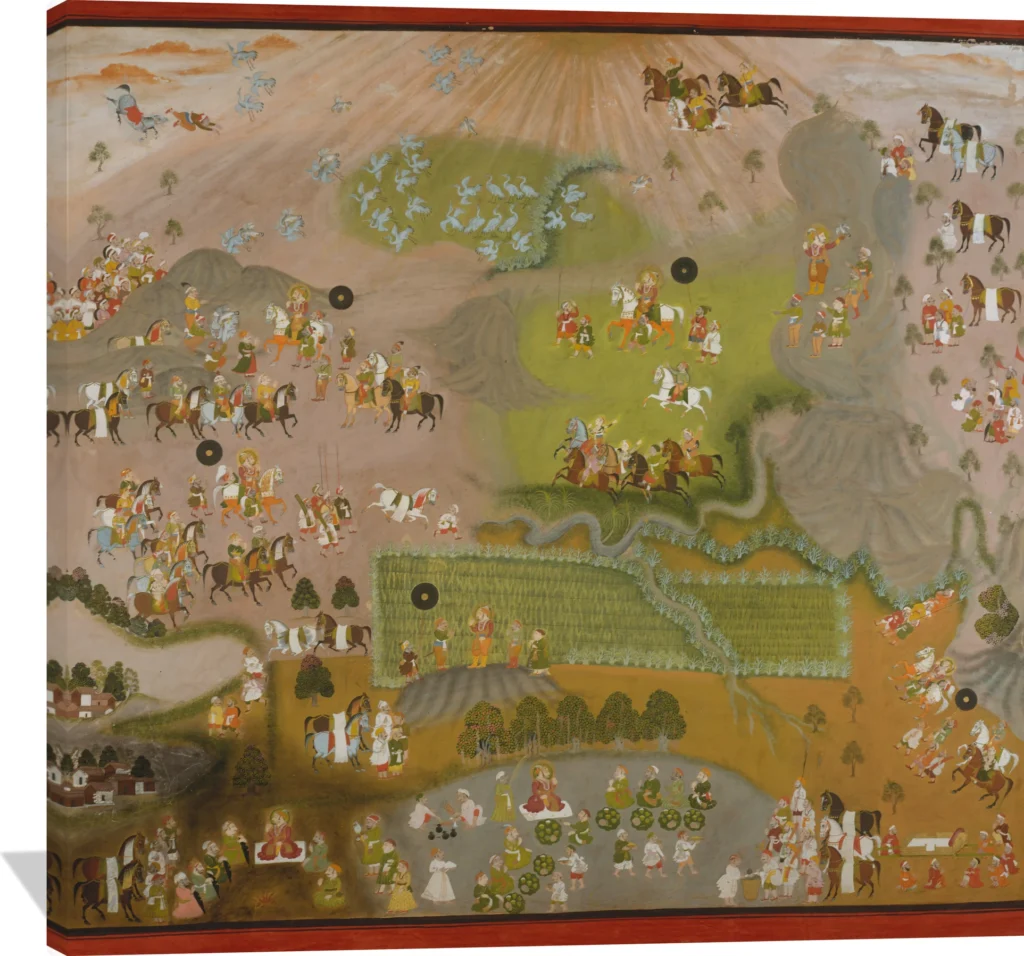
The Shiva and Dayal Maharana Jagat Singh Hawks for Cranes canvas captures a regal hunting scene alive with motion and detail. Rendered in warm earth tones, soft greens, and muted golds, this traditional Indian miniature-style composition evokes the grandeur of royal pursuits and the harmony between nature and nobility. The intricate figures, horses, and cranes unfold across a lush landscape, drawing the viewer into a timeless narrative of grace and power.
This exquisite wall art brings a sense of history and refinement to any space. Perfect for a living room, study, or entryway, this canvas print adds depth, culture, and elegance to contemporary interiors while celebrating the artistry of India’s classical heritage.
Shiva and Dayal are names associated with the rich tradition of nineteenth‑century Indian artistic ateliers, particularly those engaged in the refined practices of courtly and early colonial-era painting. Known for their meticulous craftsmanship, they worked within the evolving visual culture of North India, where indigenous techniques met new materials and shifting patronage.
Artistic Style
Their work reflects the hallmarks of late Mughal and Company School aesthetics: precise linework, delicate shading, and an attentive rendering of textiles, jewelry, and architectural ornament. Shiva and Dayal excelled in creating finely detailed compositions that balanced naturalistic observation with the lyrical stylization characteristic of Indian miniature painting.
Subjects and Themes
Their artworks frequently portrayed royal life, ceremonial scenes, portraits, and depictions of daily activities, capturing the visual identity of a society in transition. Flora, fauna, and carefully arranged interior settings often appear in their compositions, revealing a deep engagement with both traditional narrative imagery and the growing interest in empirical study introduced through colonial influence.
Cultural and Historical Significance
Shiva and Dayal’s contributions lie in their ability to preserve classical Indian artistic language while adapting to new aesthetic expectations. Their paintings document the cultural hybridity of the period, bridging courtly patronage and the tastes of emerging global audiences. Through their skilled draftsmanship and nuanced use of color, they helped shape the visual record of an era, leaving works that remain valued for their beauty, historical insight, and enduring craftsmanship.
Trust & policies
- 🚚 Free tracked shipping to 45+ countries. Local import duties or taxes may apply in some destinations.
- 🎨 Made-to-order, printed close to your delivery location
- 🛡️ If damaged, defective, or misprinted: free replacement or refund
- 🌍 Printed in US/CA/EU/UK/AU based on delivery location
- 💎 Acid-free, fade-resistant canvas with solid wood stretcher bars
- 🖼️ Optional pine floating frames in white, black, or brown
- 🪝 Ready to hang — hardware pre-installed