
On the Beach, Dieppe
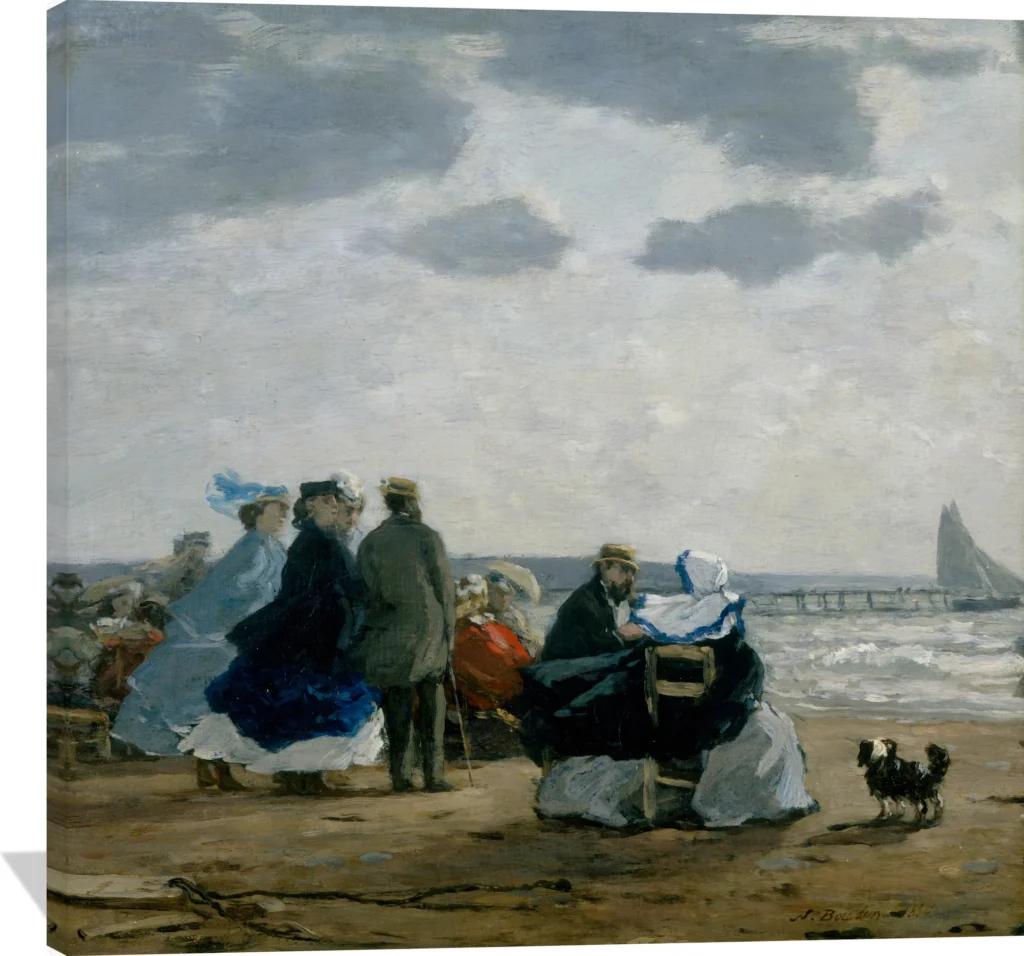
The Eugène Boudin On the Beach, Dieppe canvas captures a serene moment of seaside leisure beneath a softly clouded sky. Gentle blues, sandy browns, and muted grays convey the breezy elegance of 19th-century coastal life, as figures in refined attire gather by the shore. Boudin’s luminous brushwork and natural light evoke both calm and sophistication, making this piece a timeless addition to any art collection.
This exquisite wall art brings a touch of French Impressionist charm to your living room, study, or entryway. A canvas print of On the Beach, Dieppe invites the quiet rhythm of sea and sky into your space, offering a refined balance of atmosphere and artistry.
Eugène Boudin (1824–1898), born in Honfleur and active throughout the Channel coast, was one of France’s earliest and most influential interpreters of plein‑air painting. Celebrated for his luminous seascapes and atmospheric skies, he played a formative role in the emergence of Impressionism.
Artistic Style
Boudin’s work is distinguished by its deft, economical brushwork and a remarkable sensitivity to shifting light. His canvases often feature expansive skies rendered with nuanced tonal variations, capturing the fleeting effects of weather with clarity and restraint. This devotion to studying light directly from nature became a hallmark of his practice and a foundation for later Impressionist innovations.
Subjects and Themes
Drawn to coastal life, Boudin frequently depicted harbors, beaches, and the fashionable resort towns of Normandy. His images of elegantly dressed leisure seekers along the shore, as well as fishing boats and maritime activity, offer both poetic atmosphere and documentary insight into 19th‑century coastal culture. Works such as Beach Scene at Trouville reflect his gift for portraying the harmony between human presence and the ever‑changing sea and sky.
Legacy and Significance
Recognized by contemporaries like Baudelaire and admired by the young Claude Monet, Boudin served as a crucial bridge between traditional landscape painting and the bold explorations that would define Impressionism. His commitment to painting outdoors, his refined observational skills, and his elegant treatment of natural light established him as a pioneer of modern plein‑air practice. Today, his paintings remain prized for their clarity, freshness, and serene beauty.
Trust & policies
- 🚚 Free tracked shipping to 45+ countries. Local import duties or taxes may apply in some destinations.
- 🎨 Made-to-order, printed close to your delivery location
- 🛡️ If damaged, defective, or misprinted: free replacement or refund
- 🌍 Printed in US/CA/EU/UK/AU based on delivery location
- 💎 Acid-free, fade-resistant canvas with solid wood stretcher bars
- 🖼️ Optional pine floating frames in white, black, or brown
- 🪝 Ready to hang — hardware pre-installed