Artistic Style
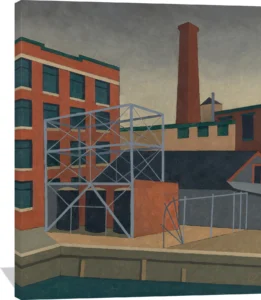
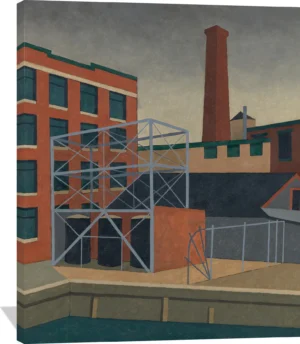
Spencer’s style is defined by clean contours, simplified geometry, and an emphasis on underlying structure. Though rooted in representational painting, his approach edged toward abstraction, revealing an interest in how shape, line, and shadow interlock. His palette often embraced restrained, harmonious tonalities that heightened the sense of calm precision.
Subjects and Themes
He is best known for industrial and urban subjects mills, factories, docks, and machinery transformed into serene, carefully balanced compositions. Rather than depicting these environments as bustling or imposing, Spencer reimagined them as composed spaces, celebrating the rhythm and order found within modern American life. Architectural forms, coastal structures, and still lifes also appear throughout his oeuvre, each rendered with the same meditative clarity.
Notable Contributions
As a central figure within the Precisionist movement, Spencer helped define a uniquely American response to modernism. His ability to merge realism with a disciplined, almost abstract design sensibility set him apart from many of his contemporaries. His paintings demonstrate how industrial subjects could carry poetic weight, elevating the everyday through thoughtful composition and structural refinement.
Legacy
Spencer’s influence endures through his distinctive vision of the American landscape. His work offers a contemplative counterpoint to the rapid industrial growth of his era, revealing beauty in the geometry of the built world. Today, he is recognized for his contributions to early twentieth‑century American art and for shaping the visual language that helped define modern American realism.