Artistic Style
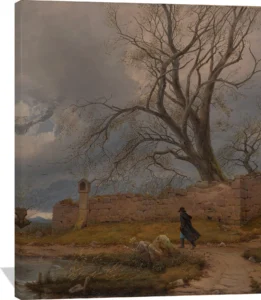
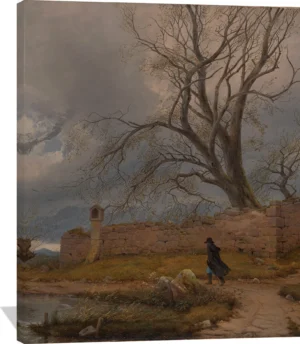
Guided by the Romantic tradition, Leypold favored luminous skies, subtle gradations of light, and carefully structured compositions. His paintings often balance realism with a sense of lyrical introspection. Through delicate brushwork and precise tonal control, he created scenes that feel both observed and dreamlike, capturing nature’s grandeur without abandoning intimate detail.
Subjects and Themes
Landscapes were Leypold’s central focus, particularly the countryside surrounding Dresden and the broader Saxon region. His works frequently depict serene rivers, wooded slopes, or rural paths, rendered with a quiet intensity that suggests more than simple topography. Architectural elements castles, church spires, or ruins occasionally punctuate these vistas, deepening the mood of reflection and time’s passage. Even when portraying well‑known sites, he approached each scene as a moment of personal encounter.
Legacy and Significance
Active during a formative era in German art, Leypold contributed to the region’s thriving landscape tradition while offering a distinctly contemplative vision. His paintings showcase a refined sensitivity to light and atmosphere, qualities that align him with the most expressive tendencies of his period. Though not as widely publicized as some contemporaries, his work remains valued for its craftsmanship and its ability to convey the profound stillness of nature.
For collectors and admirers of Romantic landscape art, Leypold’s paintings embody a thoughtful balance between emotional depth and disciplined technique, making them enduring examples of nineteenth‑century German artistry.